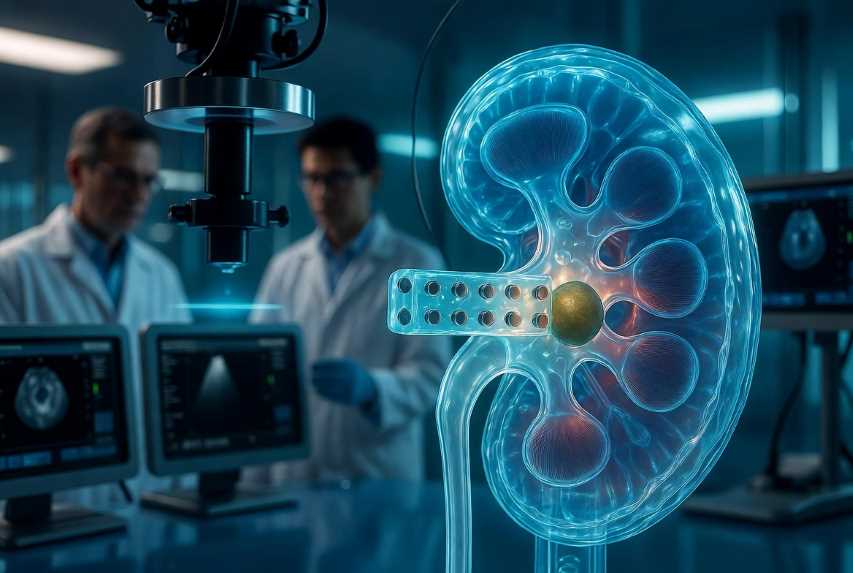
University of Waterloo-led international team creates innovative enzyme-loaded soft magnetic robots that could dissolve uric acid kidney stones directly inside the body, potentially eliminating the need for invasive procedures in suitable cases.
In a development that could reshape how certain kidney stones are treated, Canadian researchers have engineered tiny, soft, rice-grain-sized magnetic robots capable of navigating the urinary tract and chemically dissolving stones from within. This technology, still in the early research phase, represents one of the most promising advances in medical micro robotics in recent years.
The work, led by scientists at the University of Waterloo in Ontario, combines advanced materials science, magnetic actuation, and enzymatic chemistry to address a condition that causes significant pain and healthcare burden worldwide. While not yet available for clinical use, the approach offers a glimpse into a future where targeted, minimally invasive robotic interventions could replace or reduce reliance on surgery and long-term medication for specific types of kidney stones.
Understanding Kidney Stones: Prevalence, Types, and Impact
Kidney stones form when minerals and salts in the urine crystallize into solid masses. They can range in size from a grain of sand to several centimeters and may remain in the kidney or travel through the urinary tract, causing excruciating pain, bleeding, nausea, and potential blockages.
Globally, kidney stones affect roughly 12% of the population at some point in their lives, with recurrence rates as high as 50% within five years for those who have had one episode. In many countries, including Canada and the United States, emergency department visits and procedures related to kidney stones contribute substantially to healthcare costs, often running into billions of dollars annually when including lost productivity and repeated treatments.
There are several main types of kidney stones:
Calcium oxalate stones — the most common (around 80%)
Uric acid stones — accounting for approximately 5–10% of cases
Struvite stones — often linked to infections
Cystine stones — rarer and genetic in origin
Uric acid stones, the specific target of the new robotic technology, tend to form in more acidic urine. They are radiolucent (harder to see on standard X-rays) and frequently occur in people with gout, certain diets high in purines, obesity, diabetes, or those taking specific medications. Because they respond poorly to many conventional approaches, patients often endure prolonged discomfort or require more aggressive interventions.
Current Treatment Options and Their Limitations
Today’s standard treatments for kidney stones depend on stone size, location, type, and patient health. Small stones may pass naturally with pain management and increased fluid intake. Larger or obstructing stones often need medical intervention.
Oral medications, such as potassium citrate or sodium bicarbonate, aim to alkalinize urine over time. For uric acid stones, these can eventually dissolve the stone but typically require weeks to months of consistent use. Many patients experience gastrointestinal side effects, poor adherence, or incomplete results, especially if urine pH cannot be reliably maintained.
Extracorporeal shock wave lithotripsy (ESWL) uses focused sound waves from outside the body to fragment stones. It is non-invasive but less effective for larger stones, certain compositions, or stones in difficult locations. Multiple sessions may be needed, and fragments can still cause pain as they pass.
Ureteroscopy with laser lithotripsy involves inserting a thin scope through the urethra and bladder to reach the stone, then using a laser to break it apart. This is highly effective for many stones but requires anesthesia, carries risks of ureteral injury or stricture, and often involves stent placement that can cause discomfort for days or weeks afterward.
Percutaneous nephrolithotomy (PCNL) is reserved for very large or complex stones. It involves a small incision in the back to access the kidney directly. While effective, it is more invasive, requires hospital stays, and carries higher risks of bleeding, infection, and longer recovery.
For many patients—especially those with recurrent stones, older adults, or individuals with other health conditions—these options involve trade-offs in pain, downtime, cost, and potential complications. There has been a clear need for gentler, more targeted solutions that work faster and with fewer side effects.
The Waterloo Breakthrough: Rice-Grain-Sized Soft Magnetic Robots
The new technology developed by the University of Waterloo team takes a fundamentally different approach. Instead of fragmenting stones mechanically or relying on systemic medication, the researchers created tiny, tetherless, soft robots that deliver treatment directly to the stone site.
These robots are soft, flexible hydrogel strips approximately 1 centimeter long and 1 millimeter thick—small enough to be popularly described as rice-grain-sized. They are fabricated from gelatin methacryloyl (GelMA), a biocompatible, photocrosslinkable material that can safely interact with body tissues. The hydrogel matrix encapsulates the enzyme urease and contains tiny embedded micromagnets (roughly 0.7 mm × 0.5 mm, nickel-coated neodymium-iron-boron) at one end for magnetic control.
Two distinct locomotion designs were engineered:
A fin-like configuration, where the magnet is oriented perpendicular to the robot’s long axis. This uses magnetic torque to create a paddling or flipping motion, which proved effective for traveling through narrow, confined spaces such as the ureter.
A screw-like configuration, with the magnet aligned parallel to the long axis. This generates forward propulsion through rotation, offering better control and stability in wider areas like the renal pelvis.
Control is entirely external. A doctor operates a motorized rotating permanent magnet mounted on a robotic arm. By adjusting rotation frequency (typically 2–16 Hz), the team can steer the robots with precision. Real-time visualization comes from clinical ultrasound imaging in Doppler mode, which clearly shows the micromagnet’s movement without exposing patients to ionizing radiation.
Because the robots are tetherless—no wires, tubes, or catheters attached—they can move more freely and safely through the delicate urinary tract compared with traditional endoscopic tools.
How the Robots Dissolve Stones: Localized Enzymatic Action
The key innovation lies in the enzyme urease. Once the robot reaches the vicinity of a uric acid stone, urease catalyzes the breakdown of urea (a natural component of urine) into ammonia and carbon dioxide. This chemical reaction locally increases the pH of the urine surrounding the stone from acidic levels (typically 5.6–6.0) to a more neutral range around 7.0–7.2.
Uric acid is significantly more soluble at higher ph. By creating this localized alkaline environment right next to the stone, the robot accelerates chemical dissolution without needing to alkalinize the entire body’s urine through oral drugs. The process is continuous as long as the robot remains in place and active.
This targeted mechanism addresses one of the main shortcomings of oral alkali therapy: inconsistent pH control and systemic side effects. The robot can maintain an effective local pH for days, giving the stone time to shrink gradually until the remaining fragments are small enough (generally under 4–5 mm) to pass naturally through the urinary tract with minimal discomfort.
Detailed Laboratory Results and Validation
The research team conducted rigorous in vitro testing using real uric acid kidney stones (verified by Fourier-transform infrared spectroscopy) immersed in synthetic urine that mimicked human urine composition.
They tested different urease loading concentrations (3, 5, and 8 mg per milliliter). The optimal concentration of 5 mg/mL achieved an average 30% reduction in stone mass within five days, compared with only 15% reduction in control samples without robots. The urine pH rose quickly and was sustained in the effective range.
Additional experiments demonstrated:
Long-term enzyme stability — robots maintained activity for over 65 days in some tests, with daily urine replacement.
Navigation performance — both robot designs successfully traversed a life-size 3D-printed urinary tract model (including bladder, 4 mm diameter ureter, and renal pelvis) derived from actual CT scans. Maximum speeds reached approximately 5 mm/s in the ureter under optimal conditions.
Imaging clarity — clinical ultrasound reliably tracked the robots in real time.
The hydrogel material swells up to 200% in the first 24 hours but remains structurally intact for the intended treatment duration (days to a couple of weeks) before gradual degradation.
These findings were published in the journal Advanced Healthcare Materials in 2025 under the title “Kidney Stone Dissolution By Tetherless, Enzyme-Loaded, Soft Magnetic Miniature Robots.”
Potential Clinical Advantages
If successfully translated to humans, this technology could offer several meaningful benefits:
Faster symptom relief compared with oral medications alone.
Reduced need for anesthesia and invasive instrumentation in appropriate cases.
Lower risk of complications associated with surgery or repeated procedures.
Better outcomes for patients with recurrent stones or those who cannot tolerate long-term medication.
Outpatient or short-stay potential, lowering overall healthcare costs and improving quality of life.
Because the robots are soft and small, they are expected to cause minimal trauma while navigating the urinary tract. The external magnetic control also means no internal power source or complex onboard electronics are required, simplifying design and safety considerations.
Remaining Challenges and Realistic Timeline
Despite the exciting results, important limitations remain. The technology has only been tested in laboratory models and synthetic environments. Real human anatomy includes variable urine flow, ureteral peristalsis, and individual differences in urinary tract shape that must still be studied.
The approach is currently suitable only for uric acid stones that have been properly identified (usually through stone analysis or imaging characteristics). It would not work for calcium-based stones, which require different dissolution chemistry or mechanical fragmentation.
Safety questions still need addressing in living systems, including long-term biocompatibility of the micromagnet coating, potential inflammation, and complete clearance of the robot material after treatment. Manufacturing consistency, sterilization, and cost-effectiveness at scale will also be critical for eventual clinical adoption.
Regulatory approval pathways (Health Canada, FDA, etc.) typically require extensive preclinical and clinical data, meaning it could be several years before this technology reaches patients, assuming continued positive results.
Next steps outlined by the researchers include large animal studies, further optimization of the control system and ultrasound guidance, and exploration of additional therapeutic payloads the robots could carry.
Broader Significance for Medical Microrobotics
This project highlights the growing maturity of soft robotics and external magnetic actuation in medicine. Similar principles are being explored worldwide for targeted drug delivery, biofilm disruption in infections, and even certain cancer therapies. The Waterloo team’s emphasis on biocompatibility, tetherless design, and integration with existing clinical imaging (ultrasound) makes their approach particularly translatable.
Canada’s strength in engineering and interdisciplinary research—combining mechanical engineering, systems design, electrical engineering, and clinical urology—has positioned the country as a notable contributor to this emerging field. International collaborations with teams in Spain and Germany further strengthened the project’s materials science and urological expertise.
Looking Ahead
The development of rice-grain-sized magnetic robots for kidney stone dissolution is still in its early days, but it embodies the kind of innovative, patient-centered thinking that could transform aspects of urological care. For the millions of people worldwide who suffer from recurrent or difficult-to-treat kidney stones, technologies like this offer genuine hope for gentler, faster, and more precise treatment options in the future.
While patients should continue relying on established medical advice and current therapies, following the progress of this and similar research provides insight into how engineering and medicine are converging to solve longstanding clinical challenges.
The University of Waterloo team, led by Dr. Veronika Magdanz and including key contributors such as Afarin Khabbazian, Erica Liu, Lauren Kwong, and professors Alfred Yu and Mir Behrad Khamesee, continues to refine the technology. Their work stands as a compelling example of how small-scale robotics, when thoughtfully designed, can tackle big medical problems.
As further studies unfold, this Canadian innovation may one day help many patients avoid the pain, risks, and recovery associated with more invasive kidney stone treatments—delivering relief at the scale of a grain of rice.
 |  |  |
 |  |  |