Beyond the Box Grater
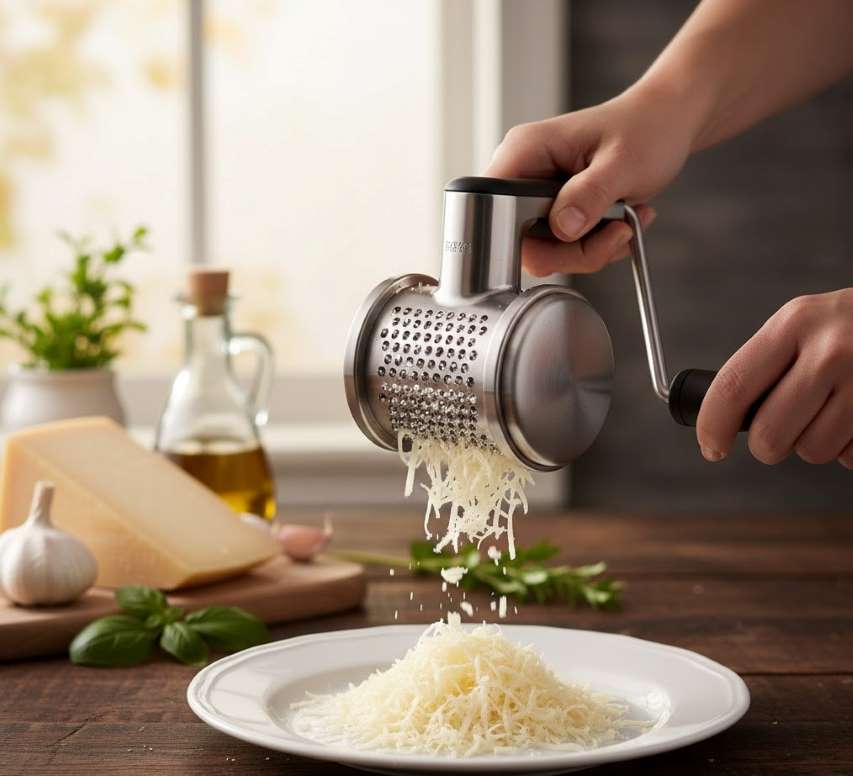
The Rotary Cheese Grater is a specialized kitchen tool designed to transform blocks of hard and semi-hard cheese into consistently sized shreds with minimal effort and maximum safety. Moving beyond the crude force required by traditional box graters, it embodies a more ergonomic, precise, and graceful approach to food preparation. Often considered a niche gadget, it proves itself an indispensable tool for enthusiasts of cooking, entertaining, and refined kitchen workflow.
Core Mechanism & How It Operates
The principle is one of elegant, mechanical simplicity, leveraging a crank-driven rotational system.
The Drum/Cylinder: The heart of the grater. This is a cylindrical barrel typically made of stainless steel, perforated with sharp, raised holes in a specific pattern (shred size).
The Hopper: A chamber or opening on top of the device where the block of cheese is inserted and held against the turning drum.
The Crank & Gearing System: Turning the external crank rotates the internal drum via a set of gears. This provides mechanical advantage, making rotation smooth and requiring little force.
The Action: As the user turns the crank with one hand and applies gentle pressure to the cheese (often with a built-in plunger or follower) with the other, the cheese is drawn across the sharp interior of the rotating drum. The metal teeth slice the cheese into uniform shreds, which fall neatly through the openings into a waiting container below.
The Base & Container: A stable base, often with a non-slip bottom, secures the unit. Most models feature an integrated, lidded container that catches the shreds, allowing for storage directly in the same vessel.
Key Components & Material Considerations
| Component | Common Materials & Features | Purpose & Benefit |
|---|---|---|
| Drum / Grating Cylinder | Stainless Steel (Most Common): Corrosion-resistant, durable, non-reactive, and easy to clean. Cast Aluminum: Lightweight and sturdy. May have a non-stick coating. | The cutting element. Defines the shred size and sharpness. Removable for cleaning. |
| Crank & Gears | Plastic or Metal: High-quality models use durable nylon or metal gears for smooth, long-lasting operation. | Provides user leverage for easy turning. Enclosed gears are safer and prevent clogging. |
| Hopper & Pressure Plunger | Plastic (BPA-Free) or Stainless Steel. The plunger fits the hopper shape to safely push cheese without risk to fingers. | Holds cheese block securely. The plunger ensures all cheese is used safely and efficiently. |
| Collection Container | Clear BPA-Free Plastic or Glass: Allows visibility of quantity. Often includes an airtight sealing lid. | Catches shreds directly for immediate use or sealed storage. Integrated design minimizes mess. |
| Base & Stability Features | Weighted Plastic, Stainless Steel, or Suction Feet. | Provides a secure, wobble-free platform during the grating process, a critical safety feature. |
Types & Shred Size Variations
Rotary graters are defined by their output, offering versatility through interchangeable drums or dedicated models.
Fine Shred (Parmesan, Pecorino): Ideal for hard, aged cheeses that will melt seamlessly into sauces, dressings, or as a delicate topping.
Medium Shred (Cheddar, Mozzarella, Gouda): The all-purpose workhorse. Perfect for sandwiches, pizzas, casseroles, tacos, and salads.
Coarse Shred (Gruyère, Emmental): Excellent for cheeses where a more distinct texture is desired, like in gratins or cheese plates.
Combo Models: Many premium units come with 2-3 interchangeable drums, offering multiple shred sizes from a single device.
Dedicated Nut/Chocolate Graters: Some feature ultra-fine drums specifically designed for grating whole nutmeg, chocolate bars, or frozen butter.
Advantages: Why Choose a Rotary Grater?
Unmatched Safety: The user's hands never come near the sharp blades. The cheese block is held by a large plunger, eliminating the risk of knuckle-grazing common with flat or box graters.
Superior Ergonomics & Ease: The crank action requires minimal effort and is far less fatiguing than the repetitive arm motion of manual grating, especially for large quantities or hard cheeses.
Consistent, Perfect Results: Produces uniform, fluffy shreds that melt evenly and integrate perfectly into dishes. Avoids the clumpy, crushed result that can come from forceful grating.
Efficiency & Cleanliness: The integrated container catches everything, containing the mess. Shredding is faster for medium-to-large volumes, and cleanup is often simpler (many parts are dishwasher-safe).
Ideal for Prepping Ahead: The airtight container allows you to grate cheese in advance and store it directly, preserving freshness and streamlining meal times.
Enhanced Flavor & Texture: Freshly grated cheese is superior in flavor and meltability compared to pre-shredded varieties, which contain anti-caking agents like cellulose.
Selection Guide: Choosing Your Perfect Model
| Consideration | Key Questions | Recommendations |
|---|---|---|
| Primary Use & Cheese Type | Will you mostly grate hard Parmesan or softer cheddar? Do you need versatility? | For hard cheeses, prioritize a model with sturdy gears and sharp blades. For general use, a 2-drum set offers flexibility. |
| Capacity & Frequency | Do you cook for one or entertain often? How much cheese do you grate at a time? | Larger hoppers and containers suit frequent users. Compact models are fine for occasional, small-batch use. |
| Ease of Cleaning | Are all key components (drum, container, plunger) dishwasher safe? Is the gear mechanism easy to wipe? | Removable drums are essential. Models with fewer crevices around the gears prevent cheese buildup. |
| Build Quality & Stability | Does it feel solid or flimsy? Does the base grip the counter during use? | Stainless steel drums and weighted bases are preferable. Avoid models that slip or wobble. |
| Storage & Footprint | Do you have drawer or cabinet space? Does it disassemble compactly? | Consider how it stores with its drums and container. Some have a sleek, all-in-one design. |
Operation Tips & Maintenance
Cheese Preparation: For optimal results and to protect the mechanism, start with a cold, firm block of cheese. Let very hard cheeses like Parmesan warm slightly at room temperature for 10 minutes. Remove any hard rinds.
The Technique: Apply gentle, consistent pressure with the plunger. Let the sharp drum and gears do the work; forcing it can strain the mechanism.
Cleaning Protocol: Disassemble immediately after use before cheese residues dry and harden. Soak the drum in warm, soapy water to loosen stuck-on bits. Use the provided brush or a soft bottle brush to clean the drum holes. Ensure the gear housing is wiped clean.
Long-Term Care: Hand-washing is often recommended to preserve the sharpness of the drums and the integrity of plastic parts. Ensure all components are completely dry before reassembly to prevent rust or mold. Periodically check for any food debris in the gearbox.
An Investment in Culinary Joy
The Rotary Cheese Grater transcends its simple function. It is an instrument that elevates a mundane, sometimes hazardous task into a safe, swift, and satisfying ritual. It champions the use of higher-quality, block cheese and rewards the user with superior culinary results. For anyone who values efficiency, safety, and the profound difference that fresh ingredients make, the rotary grater is not merely a gadget—it is a thoughtful and enduring upgrade to the kitchen toolkit.
 |  |  |
 |  |  |