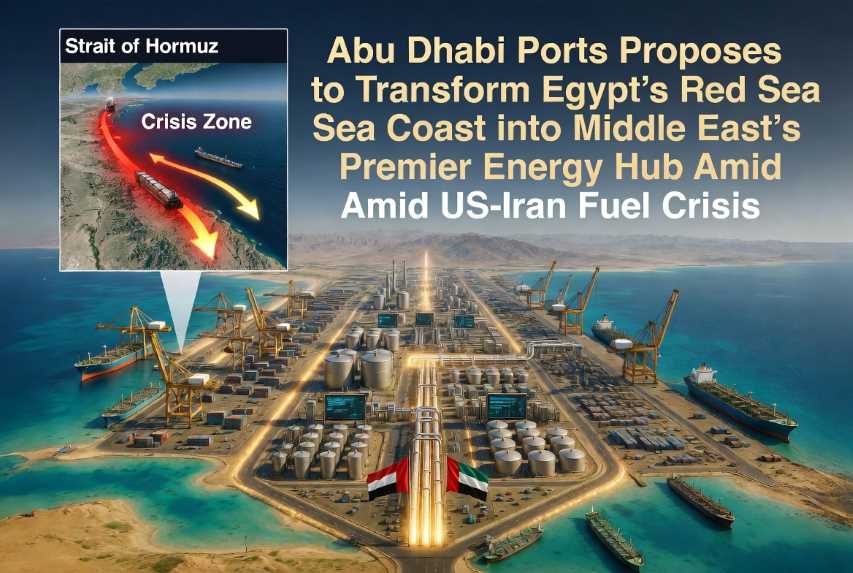
In a landmark move that could redefine energy infrastructure across the Middle East and North Africa, Abu Dhabi Ports Group has formally submitted a comprehensive and high-value offer to lease and strategically develop large-scale oil storage facilities along Egypt’s Red Sea coastline. This initiative, described by insiders as one of the most significant cross-border energy partnerships in recent years, aims to position the Egyptian Red Sea region as the largest and most advanced energy hub in the entire area. The proposal arrives at a critical juncture, as the global fuel crisis continues to intensify due to the ongoing United States-Iran war, which has dramatically disrupted traditional oil supply chains and sent shockwaves through international energy markets.
Egyptian government officials are currently in advanced stages of reviewing the proposal, with detailed negotiations centering on the precise number of storage tanks to be included, their exact geographic locations, and flexible lease structures that could range from short-term monthly agreements to long-term multi-year contracts. According to sources familiar with the discussions, both parties are optimistic that a binding agreement could be finalized and signed before the close of the second quarter of 2026. The targeted facilities boast a combined storage capacity of around 29 million barrels of crude oil and refined petroleum products, concentrated primarily at vital Red Sea ports including Ain Sokhna and Ras Badran. If realized, the deal would not only unlock underutilized Egyptian assets but also create a robust new gateway for global energy trading and distribution.
The Global Fuel Crisis: How the United States-Iran War is Reshaping Energy Dynamics Worldwide
The timing of Abu Dhabi Ports Group’s offer could hardly be more strategic. The United States-Iran war has led to the virtual shutdown of the Strait of Hormuz, a narrow chokepoint that normally handles approximately 20 percent of the world’s seaborne oil shipments and a substantial share of liquefied natural gas exports. This disruption has triggered unprecedented volatility in energy prices, with Brent crude recently surpassing $110 per barrel and showing no immediate signs of stabilization. Shipping companies have been forced to reroute vessels at enormous extra cost, while nations dependent on Persian Gulf supplies face acute shortages, higher inflation, and growing concerns over energy security.
In response, governments and energy traders are urgently seeking alternative routes, storage solutions, and logistics hubs that can bypass the conflict zone. Egypt’s unique geographic advantage—serving as the natural bridge between the Red Sea and the Mediterranean through the Suez Canal—makes its coastline an ideal candidate to step into this role. By partnering with Abu Dhabi Ports Group, Egypt stands poised to convert its existing surplus storage infrastructure into a fully integrated energy logistics powerhouse, capable of handling increased volumes of crude imports, strategic reserves, and re-export operations for markets across Europe, Africa, and Asia.
Egyptian authorities have repeatedly highlighted how this collaboration aligns perfectly with national development goals. With 19 commercial ports currently in operation and another 14 under active development, the country already possesses a modern network of nearly 80 advanced petroleum storage facilities. Leasing a significant portion of these to a world-class operator like Abu Dhabi Ports Group would generate substantial new revenue streams for the Egyptian treasury while modernizing operations through the introduction of cutting-edge technology, improved safety standards, and expanded capacity for future growth.
Deepening Strategic Partnership Between the United Arab Emirates and Egypt
This latest proposal represents a natural evolution of the already strong and growing ties between the United Arab Emirates and Egypt in the ports, logistics, and energy sectors. Back in July 2025, Abu Dhabi Ports Group entered into a formal Memorandum of Understanding with Egypt’s Ministry of Petroleum and Mineral Resources, alongside TCM Project Management, to jointly explore the development and efficient operation of the nation’s strategic crude oil storage network. That agreement laid the groundwork for today’s more ambitious initiative, emphasizing shared objectives around maximizing the economic potential of Egypt’s petroleum assets through seamless integration of ports, advanced logistics systems, and comprehensive energy solutions.
Abu Dhabi Ports Group has demonstrated its long-term commitment to Egypt through a series of major investments over recent years. These include the successful development of a state-of-the-art multipurpose terminal at Safaga Port on the Red Sea, the securing of long-term concessions for cruise passenger terminals in key tourism destinations such as Safaga, Hurghada, and Sharm El Sheikh, and the establishment of a specialized Roll-on/Roll-off terminal at Ain Sokhna. Through its Noatum Ports division, the group has also played a pivotal role in supporting trade facilitation, tourism recovery, and industrial expansion in Upper Egypt, creating thousands of direct and indirect jobs in the process.
Captain Mohamed Juma Al Shamisi, the Managing Director and Group Chief Executive Officer of Abu Dhabi Ports Group, has on multiple occasions underscored the strategic significance of Egypt within the group’s global expansion strategy. He has emphasized the importance of forging durable partnerships with local stakeholders and international financial institutions to drive sustainable infrastructure growth in emerging markets. “Egypt’s location, combined with its ambitious vision for economic modernization, makes it a natural hub for the kind of integrated port and energy solutions we specialize in delivering,” Al Shamisi noted in a recent statement.
Broader Economic, Geopolitical, and Regional Benefits on the Horizon
Should the lease agreement move forward as anticipated, the economic ripple effects for Egypt would be profound. Beyond immediate lease revenues, the partnership is expected to attract additional foreign direct investment, stimulate local supply chains, and generate new employment opportunities in construction, operations, maintenance, and advanced logistics services. Analysts project that transforming the Red Sea coast into a major energy hub could add billions to Egypt’s annual Gross Domestic Product while enhancing the country’s resilience against future global energy shocks.
From a geopolitical perspective, the deal would strengthen Egypt’s role as a stabilizing force in regional energy security. As traditional Persian Gulf routes remain vulnerable, the Red Sea corridor—bolstered by Abu Dhabi Ports Group’s operational expertise—could emerge as a reliable alternative pathway for oil and gas flows, reducing dependency on conflict-prone chokepoints and offering traders greater flexibility in managing supply risks.
Egyptian Minister of Petroleum and Mineral Resources Karim Badawi has described such collaborations as essential for advancing downstream transport, efficient distribution, and effective marketing of energy resources throughout the region. He has pointed to the United Arab Emirates as a trusted partner whose technical know-how and investment capacity can accelerate Egypt’s transformation into a leading energy logistics center.
Industry experts are closely monitoring the negotiations, viewing the potential agreement as a bellwether for how global energy players are adapting to an increasingly fragmented and volatile geopolitical landscape. Success here would not only help mitigate the immediate pressures of the current fuel crisis but also lay the foundation for long-term strategic cooperation that benefits both nations and the wider Middle East.
Looking ahead, both parties remain focused on finalizing terms that deliver mutual value while ensuring environmental sustainability and operational excellence. As the world watches the Red Sea’s potential rise as an energy superpower, this partnership could mark the beginning of a new chapter in regional infrastructure development—one defined by innovation, resilience, and forward-thinking collaboration.
 |  |  |
 |  |  |