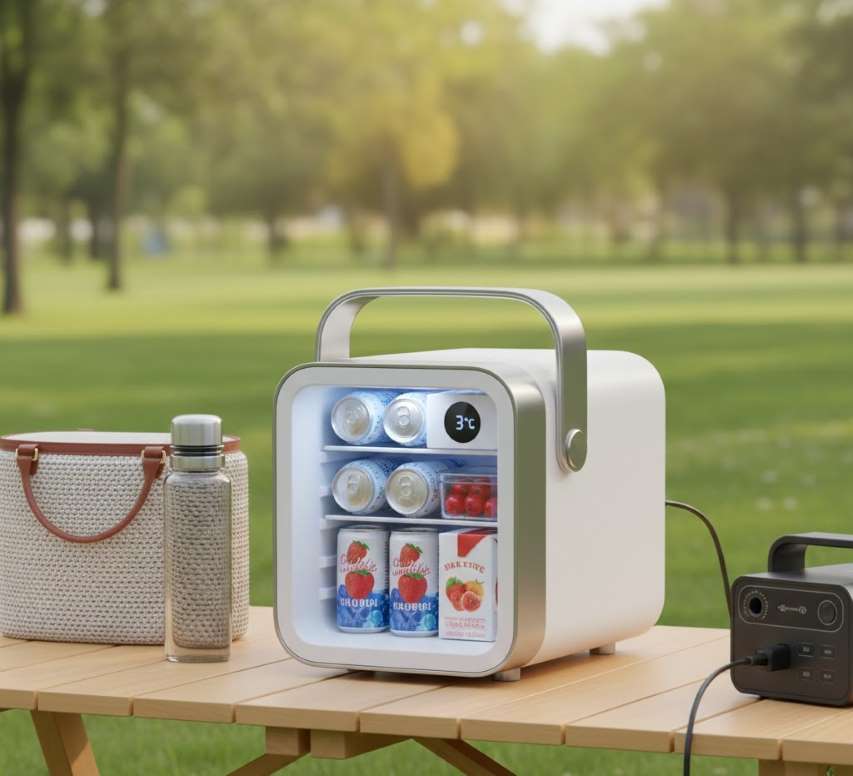
Redefining Portable Cooling
A Mini Portable Fridge is a compact, self-contained refrigeration unit designed to keep its contents cold (and sometimes warm) while operating away from a traditional wall outlet. Unlike a standard cooler that relies on pre-chilled ice blocks, it provides active, precise, and sustained temperature control through electric power. It is the ultimate tool for mobile lifestyle enthusiasts, professionals, and anyone needing reliable cooling on the go, transforming a simple picnic, road trip, or work site into a more convenient and sophisticated experience.
Core Technology & How It Works
Mini portable fridges primarily use one of two cooling technologies, each with distinct advantages and ideal use cases.
Technology | How It Works | Key Characteristics |
|---|---|---|
| Thermoelectric (Peltier Cooler) | Uses the Peltier Effect: When DC electric current passes through a junction of two different materials, one side heats up, and the other side cools down. A heat sink and fan dissipate the hot side, leaving the interior cold. | Pros: Lightweight, silent operation, no moving cooling parts (just a fan), can often heat as well, relatively inexpensive. Cons: Limited cooling capacity (typically only 36-40°F/20-22°C below ambient temperature), less energy efficient, struggles in very hot environments. |
| Compressor-Based | Uses a vapor-compression cycle identical to a full-sized refrigerator: A compressor circulates refrigerant through evaporator and condenser coils. | Pros: Can achieve true freezing temperatures (as low as -4°F/-20°C), cools efficiently regardless of ambient heat, more energy-efficient for its cooling power. Cons: Heavier, more expensive, can produce a gentle hum/vibration, usually cooling-only. |
Key Components & Features
Insulated Cabinet: Walls filled with high-density foam (like polyurethane) to maintain internal temperature and improve efficiency.
Interior Layout: Adjustable shelves, door bins, and removable baskets for organization. Interior lighting is a premium feature.
Control Panel: Digital or analog controls for setting precise temperature, often with a display showing current internal temperature and battery level.
Power System: Versatility is key. Units feature multiple input ports:
DC (12/24V) Car/Vehicle Cigarette Lighter Socket: For road trips.
AC (100-240V) Wall Outlet: For home, hotel, or office use.
DC Battery Clamps: For direct connection to a 12V battery (e.g., in an RV or boat).
Solar Panel Compatibility: Many can connect to portable solar generators or panels for off-grid use.
Battery Protection: A critical safety feature that automatically shuts off the fridge if the vehicle's battery voltage drops too low, ensuring you can still start your car.
Portability Features: Integrated handles, sturdy latches, and sometimes even wheels or a telescopic pull-handle for larger models.
Types & Common Capacities
Ultra-Compact (1-10 Liters): For lunches, insulin, skincare, or a few beverages. Fits easily on a car seat or desk.
Personal/Couple Size (10-20 Liters): Ideal for day trips, fishing, or as a dedicated medication fridge. Holds 15-25 cans.
Family/Weekender Size (20-40 Liters): Suitable for weekend camping, tailgating, or extended car travel. Can hold food and drinks for multiple people.
Dual-Zone Fridges: Feature two independently controlled compartments, allowing for both refrigeration and freezing simultaneously.
Specialized Models: Includes wearable personal cooling packs, 12V cooler/warmers for truck drivers, and ruggedized versions for construction sites.
Primary Use Cases & Applications
Travel & Road Trips: Keeps snacks, meals, and drinks fresh and accessible, saving money and time.
Camping & Tailgating: Functions as a campsite refrigerator, eliminating the mess of melted ice.
Medical Storage: Essential for safely transporting temperature-sensitive medications, insulin, or biologics.
Office & Dorm Room: Provides private, cold storage for lunches and beverages at your desk or in a small living space.
Boating & RVing: A reliable cooler alternative for marine and recreational vehicle use, often hardwired into the vehicle's system.
Outdoor Work & Events: Keeps crews hydrated and fed on job sites; useful for vendors at farmers' markets or outdoor shows.
Advantages vs. Traditional Coolers
| Feature | Mini Portable Fridge | Traditional Ice Cooler |
|---|---|---|
| Temperature Control | Precise, adjustable, and consistent. | Approximate, fluctuates as ice melts. |
| Convenience | No ice to buy, manage, or drain. Items stay dry. | Requires constant ice management; items become waterlogged. |
| Performance Duration | Runs as long as there's power. Limited by battery/fuel. | Limited by ice volume and ambient heat. |
| Functionality | Can often heat and cool. Cooling only. | |
| Food Preservation | Keeps food at safe, constant temperatures. | Risk of food entering "danger zone" as ice melts. |
Selection Guide: Choosing Your Portable Fridge
Consideration | Key Questions | Recommendations |
|---|---|---|
| Primary Use & Capacity | What will you store, for how many people, and for how long? | Calculate needed space: 20-30L per person for a weekend. For medication, a 5-10L unit is ample. |
| Cooling Technology | Do you need freezing capability or operation in hot climates? | Choose Compressor for serious cooling, camping in heat, or freezing. Choose Thermoelectric for milder needs, quiet operation, or warming function. |
| Power Source & Efficiency | Where will you use it most? From a car, battery, or wall outlet? | Check wattage and amp draw. For long vehicle use, lower amp draw is better. Ensure it has the correct ports for your needs. |
| Durability & Portability | Will it endure rugged outdoor use or stay in a sedan? | Look for robust outer shells (ABS plastic, metal), good-quality seals, and comfortable handles. Rubberized feet prevent sliding. |
| Extra Features | Are dual zones, app control, or a fast-cool function important? | Prioritize battery protection for car use. Digital controls offer precision. App connectivity is a luxury. |
Operation, Optimization & Maintenance
Pre-Chilling: Always pre-cool the fridge (and your items, if possible) for 30-60 minutes on AC power before transferring to DC/battery power. This drastically improves efficiency.
Optimal Packing: Avoid overloading. Allow for air circulation around items. Use frozen water bottles as cold "batteries" to help maintain temperature during short power interruptions.
Power Management: For extended off-grid use, calculate your power budget: (Fridge Amp Draw x Hours of Use) = Total Amp-Hours needed from your battery or power station.
Cleaning & Care: Unplug and defrost (if compressor-based) regularly. Clean interior with mild soap and water. Never use abrasive cleaners. Ensure the door seal is clean and intact.
Proper Ventilation: Keep the external vents (usually on the sides or back) completely unobstructed during operation, especially for compressor models, to prevent overheating.
Storage: When not in use for long periods, leave the door slightly ajar to prevent mold and odors. Store in a dry place.
The Freedom of Fixed Temperatures
A Mini Portable Fridge is an investment in convenience, health, and enjoyment. It liberates you from the constraints of ice and proximity to conventional kitchens, enabling fresh meals on remote trails, safe medication storage during travel, and cold drinks at the perfect temperature after hours on the road. By carefully selecting a model that aligns with your specific power, capacity, and performance needs, this compact appliance becomes an indispensable pillar of a modern, mobile lifestyle—not just a cooler, but a reliable, climate-controlled vault for whatever matters most on your journey.
 |  |  |
 |  |
|
