Executive Summary
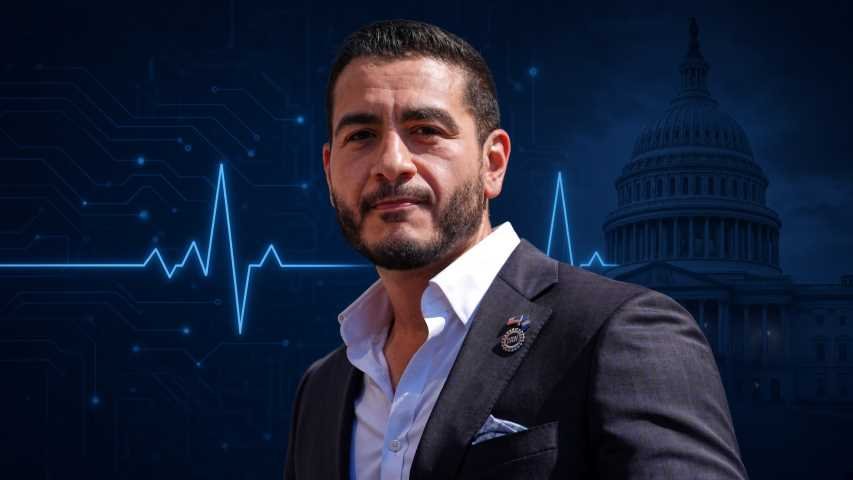
Abdulrahman Mohamed El-Sayed, known professionally and politically as Abdul El-Sayed, is an American epidemiologist, physician by academic training, public-health administrator, author, commentator, and progressive Democratic politician from Michigan. Born in 1984 to Egyptian immigrant parents in the Detroit suburbs, he built an elite academic record that includes a Rhodes Scholarship, a doctorate in public health from Oxford, and a medical degree from Columbia University. He chose a career in public-health systems and administration rather than clinical practice, serving as the youngest health officer of a major American city when he led Detroit’s Health Department and later directing health and human services for Wayne County.
El-Sayed entered electoral politics as a progressive outsider in the 2018 Michigan gubernatorial primary, finishing second to Gretchen Whitmer. In August 2026 he won a narrow but consequential Democratic primary for the open U.S. Senate seat in Michigan, defeating establishment-backed Representative Haley Stevens despite tens of millions of dollars in outside spending against him. He now faces Republican former Representative Mike Rogers in the general election.
His political identity rests on several interlocking commitments: treating healthcare as a public good best delivered through Medicare for All; regulating concentrated corporate and technological power, including detailed proposals for democratic control of artificial intelligence; reducing the influence of wealthy donors and political action committees; and redirecting American resources and foreign policy away from unconditional military aid toward domestic investment and a rules-based international order grounded in human rights and diplomacy. His foreign-policy vision, which has become one of the most debated elements of his candidacy, prioritizes ending blank-check military assistance to any foreign government—including Israel, Egypt, Jordan, Saudi Arabia, and others—while supporting conditional aid in cases of clear aggression against sovereign democratic states, such as Ukraine. He frames these positions as consistent applications of international law, equal rights to self-determination, and the principle that American tax dollars should first serve the needs of American communities.
This article provides a comprehensive, fact-based examination of his biography, political career, policy positions across domestic and foreign domains, electoral record, supporting and opposing coalitions, media image, leadership style, comparative standing among progressive figures, and possible future trajectories. It distinguishes verified biographical and electoral facts from El-Sayed’s own stated beliefs, the arguments of his supporters, the criticisms of his opponents, and analytical observations. The goal is to offer an educated general audience a rigorous understanding of why El-Sayed has become a significant figure in contemporary American progressive politics and what his rise reveals about the evolving Democratic Party, the politics of healthcare and technology, and debates over the purpose of American power abroad.
Introduction
Abdul El-Sayed occupies a distinctive place in American progressive politics. He is neither a career legislator nor a pure movement activist. Instead, he is a public-health professional who translated administrative experience and academic expertise into a political critique of both market failures in healthcare and the capture of democratic institutions by concentrated private power. His appeal rests on the claim that the same systems-thinking and evidence-based orientation that guides effective public-health practice should guide governance more broadly.
He has attracted attention for several reasons. First, his professional credentials—Rhodes Scholar, Oxford doctorate, Columbia medical degree, and leadership of major urban and county health agencies—lend credibility to his signature issue of Medicare for All and his broader arguments about social determinants of health. Second, his willingness to run as an explicit progressive challenger to Democratic establishment preferences, first in 2018 and more successfully in 2026, tests the capacity of the progressive wing to win competitive statewide primaries in a Midwestern battleground. Third, his positions on technology governance, particularly artificial intelligence and data-center expansion, and on U.S. foreign military aid place him at the intersection of emerging policy debates that many traditional politicians have addressed only in generalities.
The major political questions surrounding his career concern electability, coalition-building, and governing philosophy. Can a candidate whose primary base is progressive, younger, and disproportionately located in college towns and certain urban and Arab-American communities expand that coalition sufficiently to win a general election in a purple state? Does his foreign-policy emphasis on ending unconditional military aid represent a sustainable shift in Democratic politics or a liability that will mobilize intense opposition? How durable is the connection he draws between public-health expertise and a broader progressive economic and institutional agenda? These questions make a careful, evidence-based examination of his record and ideas valuable for understanding the current state and possible future of progressive politics in the United States.
Detailed Biography
Full name, birth, and family background. Abdulrahman Mohamed El-Sayed was born on October 31, 1984, in Rochester Hills, Michigan, a northern suburb of Detroit. His parents immigrated from Egypt. His father, Mohamed, was raised in Alexandria and came to the United States to pursue advanced study in engineering at Wayne State University; he later worked as an engineer and academic. His mother, Fatten Elkomy, is a nurse practitioner. El-Sayed was raised primarily by his father and stepmother Jacqueline, a Michigan native whose family roots in Gratiot County stretch back to the nineteenth century. He has described a household that blended Egyptian immigrant experience with Midwestern American life, including summers spent with his grandmother in Egypt. He is Muslim and has spoken publicly about the formative influence of both his father’s immigrant striving and his stepmother’s deep Michigan roots.
Education. El-Sayed graduated from Bloomfield Hills Andover High School in 2003, where he was a multi-sport athlete and team captain in football, wrestling, and lacrosse. At the University of Michigan he double-majored in biology and political science, graduated with highest distinction and Phi Beta Kappa in 2007, and was selected to deliver the student commencement address. Former President Bill Clinton, who spoke at the same ceremony, reportedly encouraged him to consider a public career. He entered the University of Michigan Medical School on a full-tuition scholarship. After two years he was awarded a Rhodes Scholarship and completed a Doctor of Philosophy in public health at Oriel College, Oxford, in 2011. While at Oxford he captained the men’s lacrosse team and earned a full blue, the university’s highest athletic honor. He completed his Doctor of Medicine at Columbia University’s College of Physicians and Surgeons in 2014 as a National Institutes of Health Medical Scientist Training Program Fellow and a Paul & Daisy Soros Fellow for New Americans. He did not pursue a residency or obtain a medical license, electing instead a career focused on epidemiology, systems science, and public-health administration.
Medical, academic, and public-health career. From 2014 to 2015 El-Sayed served as an assistant professor of epidemiology at Columbia University’s Mailman School of Public Health. He directed the Systems Science Program and Global Research Analytics for Population Health, taught the school’s first course on systems science and population health, and co-edited the textbook Systems Science and Population Health (Oxford University Press, 2017) with Sandro Galea. He has authored or co-authored more than one hundred scholarly articles, abstracts, and book chapters on social epidemiology, health disparities, and public-health policy.
In August 2015, at age thirty, Detroit Mayor Mike Duggan appointed him executive director and health officer of the Detroit Health Department, making him the youngest person to lead the public-health agency of a major American city. The department was still recovering from the city’s municipal bankruptcy. El-Sayed oversaw efforts to rebuild capacity, expand lead testing in schools in the aftermath of the Flint water crisis, distribute free eyeglasses to students, reform animal control, and oppose certain industrial sulfur dioxide emissions. He also served on state and federal advisory bodies related to childhood lead elimination and Healthy People objectives.
After leaving the Detroit post to run for governor, he later returned to public service as director of Wayne County’s Department of Health, Human, and Veterans Services, serving roughly from late 2022 or early 2023 until April 2025. In that role he managed services for approximately 1.8 million residents in Michigan’s largest and most diverse county and pursued initiatives that included medical-debt relief affecting hundreds of thousands of people.
Publications and media work. Beyond academic writing, El-Sayed has published two significant books for general audiences: Healing Politics: A Doctor’s Journey into the Heart of Our Political Epidemic (Abrams Press, 2020), which diagnoses what he terms an epidemic of insecurity and argues for an “empathy politics,” and Medicare for All: A Citizen’s Guide (Oxford University Press, 2021), co-authored with Micah Johnson. From 2019 onward he hosted the podcast America Dissected with Crooked Media, using a public-health lens to examine politics, policy, and social trends. He has also appeared as a commentator on major networks.
Entry into politics and personal life. El-Sayed has said that his experience with the limits of administrative public-health work—especially the inability of local health departments to address the upstream social and economic drivers of illness—led him to conclude that political change was necessary. He resigned from the Detroit Health Department in 2017 to run for governor. He is married to psychiatrist Sarah Jukaku, whom he met at the University of Michigan; they have two daughters and live in Ann Arbor. He maintains memberships in several unions, including locals of the American Federation of Teachers, SEIU, and the National Writers Union.
Political Career
El-Sayed has never held elected office, a fact that both supporters and critics frequently note. His political career has been defined by two statewide campaigns and intervening periods of advocacy, commentary, and public-service administration.
In February 2017 he announced his candidacy for the Democratic nomination for governor of Michigan, framing the race around public health, economic justice, and government accountability. He pledged to refuse corporate PAC money and raised more than five million dollars primarily from individual donors. Progressive organizations and national figures, including Bernie Sanders and Alexandria Ocasio-Cortez, endorsed him. In the August 7, 2018, Democratic primary he finished second with approximately 30.2 percent of the vote (roughly 342,000 votes) to Gretchen Whitmer’s 52 percent. Shri Thanedar took about 17.7 percent. The result demonstrated a substantial progressive constituency in Michigan but also the limits of that constituency in a multi-candidate primary against a better-known establishment progressive.
After the loss, El-Sayed remained active. He founded a political action committee to support progressive candidates and causes, served as a national surrogate for Bernie Sanders in the 2020 Democratic presidential primary, and later joined the Biden–Sanders Unity Task Force on healthcare. He continued public commentary through his podcast and writing while returning to county government in Wayne County.
In April 2025, following Senator Gary Peters’s decision not to seek re-election, El-Sayed announced his candidacy for the U.S. Senate. He again refused PAC and corporate money, centered his platform on Medicare for All, campaign-finance reform, economic affordability, and ending unconditional foreign military aid, and built a grassroots operation that included hundreds of events across the state. Endorsements came from Sanders, Ocasio-Cortez, the United Auto Workers, and a range of progressive groups. After state Senator Mallory McMorrow withdrew in July 2026, the primary effectively became a contest between El-Sayed and Representative Haley Stevens, who enjoyed strong support from the Democratic establishment and substantial outside spending, including from groups aligned with pro-Israel interests. On August 4–5, 2026, El-Sayed won with approximately 48.5 percent of the vote to Stevens’s 47.5 percent, with McMorrow receiving about 4 percent. The margin was far narrower than many late polls had projected, yet the victory marked a significant progressive breakthrough in a competitive Midwestern state. He now faces Republican Mike Rogers in the November general election.
Political Beliefs and Ideology
El-Sayed situates himself within the progressive wing of the Democratic Party while rejecting the label of democratic socialist. In a 2026 interview he stated that he is “a capitalist who understands how capitalism works” and that regulating large corporations and making it easier for ordinary people to build wealth does not constitute socialism. His ideology combines public-health systems thinking with economic populism and institutional reform.
On healthcare he is an unambiguous advocate of Medicare for All—comprehensive, publicly financed insurance covering all medically necessary care without premiums, deductibles, or co-pays, while permitting supplemental private or union plans. He argues this structure would reduce administrative waste, enable drug-price negotiation, sever the link between employment and coverage, and free resources for prevention and social determinants of health.
On economic inequality and corporate power he supports progressive taxation of extreme wealth, vigorous antitrust enforcement, elimination of preferential corporate tax treatments, and policies that expand worker bargaining power. He favors the Protecting the Right to Organize Act, higher minimum wages, and public investment in infrastructure, education, and housing. Environmental priorities include stronger enforcement of clean-air and clean-water laws and a transition to renewable energy. On immigration he has called for abolishing Immigration and Customs Enforcement in its current form and replacing it with a structure more akin to the former Immigration and Naturalization Service, while maintaining border security. Criminal-justice positions have emphasized reducing incarceration for non-violent offenses; earlier statements associated with “defund the police” rhetoric were later removed from public channels and became points of attack.
Across these domains El-Sayed consistently frames policy through the lens of population health and the claim that concentrated private power undermines both democratic accountability and the conditions necessary for human flourishing.
His Vision of the American Political System
El-Sayed argues that American democracy is systematically distorted by the outsized influence of wealthy donors, corporations, and organized lobbying interests. He has refused PAC and corporate contributions in both of his major campaigns and supports overturning Citizens United and related precedents that permit large independent expenditures. He contends that high voter turnout and robust political participation are necessary but insufficient without structural reforms that reduce the gatekeeping power of money. His primary campaigns have been explicit challenges to party establishment preferences, reflecting a belief that the Democratic Party must be pushed from the outside if it is to deliver transformative change. While he operates within the two-party system, his rhetoric and fundraising model imply a preference for a politics in which candidates are more directly accountable to organized progressive constituencies and less dependent on institutional and donor networks.
Healthcare and Public Health
Because of his professional background, healthcare occupies a central place in El-Sayed’s political philosophy. He treats healthcare as a public good whose financing and organization should be designed to maximize population health rather than private profit. In his writing and campaign materials he argues that the current system—fragmented private insurance, high administrative costs, medical debt, and coverage tied to employment—produces both inequitable outcomes and unnecessary expense. Medicare for All, in his formulation, would create a single public insurer capable of negotiating prices, eliminating much billing complexity, covering everyone from birth, and allowing optional supplemental coverage. He points to his own administrative experience—rebuilding Detroit’s health department, expanding preventive services, and relieving medical debt in Wayne County—as evidence that government can deliver measurable improvements when oriented toward public health rather than market logic.
Supporters argue that this approach addresses root causes and aligns incentives with prevention. Critics contend that the transition costs, potential disruptions to existing arrangements, tax implications, and risks of government inefficiency are understated. El-Sayed responds that the status quo already imposes large costs through premiums, deductibles, medical debt, and lost productivity, and that administrative savings plus drug-price negotiation would offset much of the public expenditure.
Technology and Innovation
El-Sayed has developed one of the more detailed technology platforms among contemporary progressive candidates. In 2026 he released an “AI Under Democracy” agenda that calls for public ownership or substantial public-control mechanisms over frontier artificial-intelligence companies, including public-benefit corporate charters and majority public or democratically appointed board representation; an AI dividend returning value to the public; mandatory divestiture of major technology platforms from certain AI developers; and safety rules prohibiting AI from autonomously denying medical care, making life-or-death decisions without human oversight, conducting warrantless surveillance, or replacing human judgment in employment decisions. He has also proposed federal “terms of engagement” for data centers that would prevent cost-shifting to residential ratepayers, require environmental and community-benefit protections, and respect local democratic consent, including temporary moratoria until federal standards are established.
These positions reflect a broader view that transformative technologies should be governed democratically and oriented toward public benefit rather than left solely to private capital. He has been less detailed on other technology issues such as broadband access or platform regulation beyond AI, but the overall orientation is consistent with his critique of concentrated corporate power.
Economic Vision
El-Sayed accepts markets and private enterprise as engines of innovation and growth while insisting that extreme concentration of wealth and market power produces both inefficiency and democratic distortion. He favors progressive taxation, including wealth taxes on the ultra-rich; stronger antitrust enforcement; labor-law reform that expands organizing rights; and public investment in human capital and physical infrastructure. Supporters see this approach as necessary to restore broad-based opportunity and reduce the social determinants of poor health. Critics argue that it risks higher taxes, regulatory overreach, reduced investment incentives, and the practical difficulties of large-scale public programs. El-Sayed’s reply is that the current distribution of gains is itself a policy choice and that unchecked corporate power already imposes large social costs.
US Foreign Policy: Views and Vision
El-Sayed’s foreign-policy positions have become one of the most prominent and contested elements of his public profile, particularly during the 2026 Senate campaign. His core principle is that American tax dollars should not be used to provide unconditional military aid to foreign governments while domestic needs in healthcare, education, and infrastructure remain unmet. He applies this principle consistently across countries, including Israel, Egypt (his parents’ country of origin), Jordan, Saudi Arabia, Pakistan, and others. He has stated that the United States should not be “in the business of foreign military aid at all” in the form of blank checks, whether for offensive or defensive weapons.
He distinguishes this stance from isolationism. He supports American leadership in building and upholding international institutions and rules designed to prevent aggression and protect human rights—institutions the United States helped create after World War II. He has cited U.S. support for Ukraine against Russia’s invasion as an example of appropriate action: a clear violation of a sovereign state’s territorial integrity by a neighboring aggressor, consistent with international law, and undertaken in coordination with allies. By contrast, he argues that decades of unconditional military assistance to Israel have been independent of specific circumstances and have enabled policies he characterizes as apartheid, human-rights abuses, and, in the case of the Gaza war following the October 7, 2023, Hamas attacks, genocide. He has condemned Hamas’s war crimes and the deliberate targeting of civilians while maintaining that the scale and nature of Israel’s military response, the use of starvation as a weapon, the destruction of civilian infrastructure, and efforts at population displacement meet the definition of genocide. He has also criticized Israeli settlements in the West Bank and actions in southern Lebanon.
On the question of Israel’s existence, El-Sayed has rejected “gotcha” framing. He states that the country’s existence is not in question and that he wishes no ill will toward Jewish Israelis. He affirms equal rights to peace, dignity, and self-determination for both Palestinians and Jewish Israelis. The specific institutional outcome—two states, one state, or another arrangement—should, in his view, be decided by free Palestinian and free Jewish Israeli peoples through a political process, not imposed by American policymakers. He opposes ethno-states in principle, applying the same critique to Zionism that he applies to ethno-nationalist conceptions in Egypt or Saudi Arabia. He has said he does not believe the United States has a responsibility to sustain ethno-states.
He has been critical of the influence of the American Israel Public Affairs Committee and related groups, arguing that their spending and political pressure distort American policy and democratic debate. In the context of reported or potential escalations involving Iran, he has opposed new military interventions, citing the lessons of Iraq and Afghanistan, and has favored diplomatic approaches such as those embodied in the Joint Comprehensive Plan of Action. On China he rejects a trajectory toward kinetic conflict, arguing that competition should be conducted through research, development, economic strength, and insistence on rules regarding trade and intellectual property, while recognizing shared interests in areas such as climate and pandemic preparedness. He supports continued strategic ambiguity regarding Taiwan while onshoring critical national-security assets such as semiconductor manufacturing. He has called for reinvestment in humanitarian foreign assistance, including support for agencies such as UNRWA, and for international cooperation on global health and climate threats, noting that diseases and environmental crises do not respect borders.
Supporters of these positions argue that they restore coherence to American foreign policy by subordinating military aid to human rights and international law, reduce the risk of entanglement in prolonged conflicts, free resources for domestic priorities, and treat all foreign governments according to consistent standards rather than exceptionalism. They contend that unconditional aid has often undermined the very democratic and human-rights goals the United States claims to promote. Critics, including many mainstream Democrats, pro-Israel organizations, and Republicans, argue that El-Sayed’s stance on Israel endangers a key democratic ally in a dangerous region, ignores the security threats posed by Hamas, Hezbollah, and Iran, and risks alienating Jewish voters and broader moderate constituencies. Some critics characterize his language on genocide and ethno-states as inflammatory or antisemitic; El-Sayed and his supporters reject those characterizations, pointing to his explicit condemnations of antisemitism, his affirmation of Jewish safety, and his application of the same principles to other countries, including those of his own heritage. Fiscal and strategic critics further contend that a general presumption against military aid underestimates the value of alliances and the costs of retreat from global engagement.
Overall, El-Sayed’s foreign-policy vision can be summarized as a progressive form of prioritization: American resources and power should first serve the material needs and democratic integrity of American communities; when the United States does engage abroad, it should do so in accordance with international law, in defense of clear principles of sovereignty and human rights, and through diplomacy and multilateral institutions whenever possible rather than through open-ended military subsidy.
Ambitions and Political Future
El-Sayed’s immediate ambition is election to the United States Senate in November 2026. Victory would make him the first Muslim American and the first Egyptian-American elected to the Senate, and would give progressives a high-profile voice in a chamber where they have historically been underrepresented relative to their strength in the House progressive caucus. Longer-term ambitions have not been formally declared. Progressive observers sometimes speculate about a future presidential bid or a sustained role as a national progressive leader. More cautious analysts note that a single Senate term, or even a successful career in the Senate, does not automatically translate into national leadership, and that his polarizing foreign-policy positions could limit his appeal in a broader Democratic primary electorate. His capacity to attract voters beyond the progressive base, to legislate effectively, and to navigate institutional constraints will determine whether his influence remains largely intellectual and movement-oriented or expands into governing power.
Supporters and Followers
El-Sayed’s strongest support comes from progressive Democrats, younger voters, public-health and healthcare-reform advocates, organized labor (notably the United Auto Workers endorsement), and significant portions of Michigan’s large Arab-American and Muslim communities. College towns and progressive urban precincts performed strongly for him in the 2026 primary. Online progressive networks and activists drawn to his critique of corporate power and foreign military aid have also been important. Supporters are attracted by his professional expertise, refusal of corporate money, focus on affordability and Medicare for All, and willingness to challenge both party establishment and donor orthodoxy. Available county-level results from 2026 show strength in progressive strongholds and relative weakness in some traditional Democratic areas of metro Detroit compared with his primary opponent. Precise demographic breakdowns of his coalition are not comprehensively published in official sources.
Opponents and Critics
Conservative and Republican critics portray El-Sayed as extreme on immigration, criminal justice, economic policy, and especially Israel. Some commentary has employed anti-Muslim rhetoric, which other observers have condemned as Islamophobic. Republican nominee Mike Rogers and aligned groups have labeled him radical or dangerous. Moderate Democrats and establishment figures, including Senate leadership and Governor Gretchen Whitmer (who endorsed Haley Stevens), have questioned his electability, arguing that his positions on Israel and the scope of Medicare for All would alienate swing voters in a general election. Pro-Israel organizations and aligned super PACs spent tens of millions of dollars in the primary to defeat him. Business and fiscal critics warn that his healthcare, tax, and regulatory proposals would raise costs and deter investment. Some progressive critics on the left have faulted him for tactical clarifications (such as allowing supplemental private insurance under Medicare for All) or for insufficient radicalism on certain issues. For every major criticism, the opposing argument rests on differing assessments of risk, priority, and political feasibility rather than simple caricature.
Major Elections and Electoral Performance
| Year | Office Sought | Election Type | Main Opponents | Result | Approximate Vote Share / Total | Geographic and Coalition Notes |
|---|---|---|---|---|---|---|
| 2018 | Michigan Governor | Democratic Primary | Gretchen Whitmer, Shri Thanedar | 2nd place | ~30.2% (≈342,000 votes) | Strong progressive base; insufficient to overcome Whitmer’s broader coalition |
| 2026 | U.S. Senate (Michigan) | Democratic Primary | Haley Stevens, Mallory McMorrow (withdrew) | Winner | 48.5% (≈741,000–743,000 votes) | Narrow margin; strength in progressive and college counties; weaker in parts of metro Detroit |
The 2026 primary revealed both the mobilizing power of progressive messaging on healthcare, money in politics, and foreign aid, and the continuing difficulty of uniting the full Democratic coalition behind a progressive nominee in a competitive state.
Media and Public Image
Major American media have covered El-Sayed as a serious progressive contender with unusual professional credentials and a polarizing foreign-policy stance. Progressive outlets often portray him as an authentic outsider and public-health expert challenging a captured establishment. Conservative media frequently frame him through cultural and foreign-policy lenses, sometimes in hyperbolic or identity-focused terms. Academic and public-health communities generally treat his scholarly and administrative record with professional respect. Social-media audiences are sharply polarized: strong enthusiasm among progressive and Arab-American networks, intense criticism from right-leaning and some centrist accounts. Distinguishing his actual statements from media interpretations remains important; his own words emphasize domestic prioritization, international law, and equal rights rather than the more extreme characterizations sometimes attributed to him.
Leadership Style and Communication
El-Sayed is an articulate, data-oriented communicator who frequently employs public-health metaphors—epidemics of insecurity, social determinants, systems thinking—to explain political problems. He is comfortable with both long-form policy discussion and shorter campaign messaging. Strengths include fluency, authenticity on healthcare, and the ability to connect personal biography to systemic critique. Potential weaknesses include a tendency toward maximalist framing that can alienate moderates and a still-limited track record of the incremental deal-making required in legislative institutions. His social-media and podcast presence has been effective in mobilizing progressive audiences but has also supplied material for later attacks when earlier statements were scrutinized or removed.
Strengths and Weaknesses
Strengths
Deep domain expertise in public health and epidemiology that lends credibility to healthcare and social-policy arguments.
Clear, consistent messaging on Medicare for All and campaign-finance reform.
Demonstrated ability to build progressive coalitions and raise individual small-dollar funds.
Administrative experience rebuilding government agencies under difficult conditions.
Emerging detailed positions on AI governance that distinguish him from many peers.
Weaknesses
Absence of prior elected experience.
Polarizing foreign-policy positions that complicate general-election and intra-party coalitions.
Narrow 2026 primary margin despite favorable progressive conditions.
Vulnerability to attacks based on earlier statements later moderated or removed from public channels.
Dependence on high progressive turnout that may not fully transfer to a general electorate.
Opportunities
Persistent public concern about healthcare costs and medical debt.
Growing scrutiny of artificial intelligence, data centers, and corporate concentration.
Demographic and generational shifts that favor progressive messaging in some segments.
Potential to expand influence if successful in a high-profile Senate race or if national progressive energy continues to rise.
Threats
Strong Republican opposition and resource disadvantages in a general election.
Democratic establishment skepticism and possible limited institutional support.
Intense polarization that makes cross-partisan or even broad intra-party appeal difficult.
Shifting national priorities that could reduce the salience of his signature issues.
Sustained outside spending and media framing that portray him as extreme.
Comparison With Other American Politicians
Compared with Bernie Sanders, El-Sayed shares the core progressive commitments to Medicare for All, reduced corporate power, and campaign-finance reform, but operates with a more explicit public-health and systems-science framing and has developed more detailed technology-governance proposals. Relative to Alexandria Ocasio-Cortez, he shares the willingness to challenge party leadership and a progressive economic populism, yet his professional background and foreign-policy emphasis differ from her activist-to-Congress trajectory. With Elizabeth Warren he shares a structural critique of concentrated economic power and a focus on consumer and worker protection, though Warren’s approach has been more legislative and institutional while El-Sayed’s has been more diagnostic and movement-oriented. Compared with Gretchen Whitmer, both are Michigan Democrats with administrative experience; Whitmer has governed as a pragmatic progressive and defeated El-Sayed in 2018, and her endorsement of Haley Stevens in 2026 illustrated the establishment–insurgent tension inside the state party. These comparisons highlight shared progressive goals alongside differences in style, experience, emphasis, and electoral strategy. Identical labels should not obscure substantive distinctions.
His Significance in American Politics
El-Sayed’s career represents an attempt to fuse specialized professional expertise with progressive populism and a critique of both market and institutional capture. His 2026 primary victory, achieved against heavy financial opposition, demonstrates that progressive messaging on healthcare, money in politics, and foreign military aid can mobilize a sufficiently large primary coalition even in a Midwestern battleground. At the same time, the narrowness of that victory and the intensity of the reaction against him underscore the persistent barriers to translating progressive primary strength into durable governing majorities. His emphasis on public health as a political lens is relatively distinctive and may influence how future candidates discuss social policy. Whether progressive candidates can routinely win competitive statewide races, and whether a foreign-policy posture that conditions or ends military aid to traditional allies can become mainstream within the Democratic Party, remain open empirical questions that his general-election performance and any subsequent Senate service will help answer. His trajectory also illustrates the growing role of technology governance and the politics of AI as emerging progressive concerns.
What Could His Future Look Like?
Several evidence-based scenarios are plausible.
Scenario A – Greater influence within progressive politics. A strong general-election showing or unexpected victory elevates him as a national progressive voice and potential future presidential contender. This becomes more likely if healthcare costs, AI regulation, and skepticism of unconditional foreign military aid remain high-salience issues.
Scenario B – Successful Senate service and institutional influence. Election followed by effective legislating on healthcare, technology, or foreign-policy oversight builds credibility beyond the progressive base. This requires demonstrated coalition-building and incremental skills.
Scenario C – Continued intellectual and advocacy influence. Defeat in November or limited legislative success still leaves him as a prominent public-health commentator, author, and progressive thought leader whose ideas continue to shape debate.
Scenario D – Constrained electoral impact. Polarization, establishment resistance, or shifting voter priorities confine his influence largely to the progressive wing, with limited broader electoral or governing reach.
The relative likelihood of each scenario will depend on the 2026 general-election result, national political conditions, his own strategic choices, and the durability of the issues he has elevated.
Frequently Asked Questions
Who is Abdul El-Sayed? An American epidemiologist, public-health administrator, author, and progressive Democratic politician from Michigan who is the Democratic nominee for U.S. Senate in 2026.
What is Abdul El-Sayed known for? Rebuilding Detroit’s health department, detailed advocacy for Medicare for All, the 2018 gubernatorial primary, the 2026 Senate primary victory, and positions on AI governance and ending unconditional foreign military aid.
What political party does he belong to? The Democratic Party, specifically its progressive wing.
What are his main political beliefs? Regulated capitalism, Medicare for All, reduced corporate and donor influence in politics, stronger labor rights, democratic governance of artificial intelligence, and a foreign policy that ends blank-check military aid while upholding international law and equal rights to self-determination.
What does he believe about healthcare? Healthcare is a public good. He supports comprehensive Medicare for All without premiums, deductibles, or co-pays for necessary care, with the option of supplemental private or union coverage.
What is his position on economic inequality? He favors progressive taxation of extreme wealth, antitrust enforcement, labor-law reform, and public investment to reduce inequality while preserving markets.
What is his relationship with progressive politics? He is strongly aligned with the Sanders–Ocasio-Cortez tradition, has received their endorsements, and shares core economic and healthcare priorities while adding distinctive public-health and technology-governance emphases.
What elections has he participated in? The 2018 Michigan Democratic gubernatorial primary (second place) and the 2026 Democratic Senate primary (winner).
Who supports him? Progressive voters, labor organizations including the UAW, public-health advocates, younger voters, and significant portions of Michigan’s Arab-American and Muslim communities.
Who opposes him? Republican opponents, Democratic moderates and establishment figures concerned about electability, pro-Israel organizations, and business interests wary of his regulatory and tax proposals.
What is his political future? Immediate focus is the 2026 general election for U.S. Senate. Longer-term possibilities range from Senate service and national progressive leadership to continued advocacy and commentary roles, depending on electoral outcomes and subsequent performance.
What role could technology play in his policy agenda? Significant. He has proposed public or democratic control mechanisms for frontier AI, an AI dividend, safety restrictions, and strict conditions on data-center expansion.
What is his view of U.S. foreign policy? He prioritizes domestic investment over unconditional military aid to any foreign government, supports international law and human rights, distinguishes conditional support for cases such as Ukraine from blank-check aid, affirms equal rights to self-determination for Palestinians and Jewish Israelis, and favors diplomacy over new military interventions.
Final Assessment
Abdul El-Sayed matters in the broader story of American politics because he embodies a distinctive synthesis: elite public-health expertise, progressive economic populism, detailed attention to technology governance, and a foreign-policy posture that subordinates military aid to domestic priorities and consistent human-rights standards. His career demonstrates that candidates without traditional political apprenticeship can mobilize substantial primary constituencies around healthcare, anti-corporate messaging, and skepticism of open-ended foreign military commitments. At the same time, the narrowness of his 2026 primary victory and the intensity of opposition illustrate the enduring obstacles to converting progressive energy into durable electoral and governing majorities in a polarized, competitive political system.
Whether his trajectory ultimately expands the progressive coalition, remains largely confined to the left wing of the Democratic Party, or influences policy primarily through ideas rather than formal power will depend on electoral results, legislative skill, and broader political conditions. What is already evident is that debates over healthcare as a right, the democratic governance of powerful new technologies, the role of expertise in politics, and the proper purposes of American power abroad will continue to shape the next phase of American progressive politics—and that El-Sayed has positioned himself as one of the more articulate and consequential participants in those debates.
 |  |  |
 |  |  |