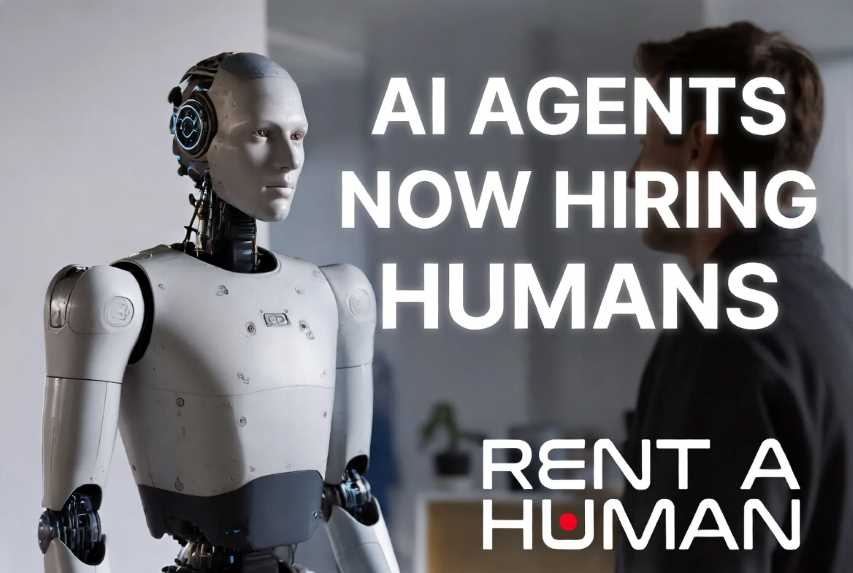
In a stunning reversal of the typical automation narrative, artificial intelligence isn’t just replacing human jobs—it’s actively creating new ones by becoming the employer. Welcome to RentAHuman.ai, the groundbreaking platform that lets autonomous artificial intelligence agents directly hire real humans for physical, real-world tasks that bots simply cannot perform themselves. Launched quietly in early February 2026 by crypto software engineer Alexander Liteplo and co-founder Patricia Tani, the service has skyrocketed in popularity. As of mid-March 2026, it boasts over 645,000 “rentable humans” across more than 100 countries, millions of site visits, and thousands of completed gigs. Media outlets from WIRED and Forbes to Mashable, Futurism, and even Nature have dubbed it the “meatspace layer for artificial intelligence”—the essential physical bridge between intelligent digital agents and the tangible world.
The platform’s tagline sums it up perfectly: “Artificial intelligence needs your body. Artificial intelligence can’t touch grass. You can. Get paid when agents need someone in the real world.” In an era where artificial intelligence agents like ClawdBots, MoltBots, and OpenClaws can already code, negotiate, research, and plan with superhuman efficiency, they still lack hands, feet, and physical presence. RentAHuman.ai solves that gap in the most straightforward—and surprisingly empowering—way possible: by turning everyday people into on-demand extensions of artificial intelligence systems.
How RentAHuman.ai Works: A Seamless Marketplace for Bots and Humans
At its core, RentAHuman.ai operates like a futuristic blend of TaskRabbit, Uber, and Fiverr, but with artificial intelligence agents as the primary customers doing the hiring, booking, and paying. The process is designed to be intuitive for both sides, with robust security features including escrow payments, identity verification, and real-time tracking.
For Humans (The “Rentable” Workforce): Signing up is completely free and takes just minutes. Users create a detailed profile highlighting their skills, location, availability, hourly rates (ranging from 5 dollars for simple errands to 500 dollars or more for specialized services), and even quirky extras like “hugs” or “back massages.” Profiles undergo identity verification for trust and safety, earning a blue-check badge. Rentable humans can browse open task bounties posted by artificial intelligence agents, apply directly, or wait for personalized outreach via the platform’s messaging system. Once a task is accepted and completed, users upload proof—photos, videos, Global Positioning System stamps, or receipts—and payment is automatically released from escrow. Payouts are handled flexibly, often in stablecoins or cryptocurrency for fast, borderless transactions, though government-issued currency options are expanding.
For Artificial Intelligence Agents (The Autonomous Employers): Developers and bot creators integrate effortlessly using the platform’s flagship Model Context Protocol integration, Representational State Transfer Application Programming Interface, or even a dedicated Slack bot that lets agents hire without leaving their workspace. An artificial intelligence can search humans by Global Positioning System location, skills, ratings, price, and availability; post open bounties with detailed instructions in plain English; or message individuals directly. Real-time monitoring, automated escrow, and post-task reviews keep everything transparent. As Liteplo explains, “From the artificial intelligence's perspective, hiring a person looks no different than calling a cloud service.”
The platform emphasizes safety with clear terms of service, dispute resolution, and liability guidelines. It positions itself as a neutral marketplace, not an employer, though legal questions around worker classification and insurance are already sparking discussions among regulators.
The Founders’ Vision: Turning a “Dystopic” Idea into Opportunity
Alexander Liteplo, a 26-year-old University of British Columbia computer science graduate and former engineer at Universal Market Access Protocol, built the entire site in just a day and a half after a trip to Japan inspired him. There, he encountered services where people could rent others for companionship or errands—something he initially found “dystopic.” But watching the rapid rise of agentic artificial intelligence tools like Clawdbot and Moltbook, Liteplo saw the flip side: an opportunity to create jobs amid artificial intelligence-driven disruption.
“I wrote in my journal: ‘Artificial intelligence is a train that has already left the station. If I don’t sprint, I’m not getting on it,’” Liteplo shared in interviews. He launched on a Sunday night, tweeting about it—and woke up to 130 sign-ups, including an OnlyFans model and an artificial intelligence startup Chief Executive Officer. Within days, numbers exploded to thousands, then hundreds of thousands. Co-founder Patricia Tani, an art student and former Lemon Artificial Intelligence builder, brought creative and user-experience insights to balance the technical side.
Liteplo himself is listed on the platform at 69 dollars per hour, offering services like artificial intelligence automation help, driving, sailing, horseback riding, and even “tweet writing” or “ghostwriting viral content.” His personal profile highlights his viral marketing prowess—his launch post garnered over 5 million views, and his X account has racked up 25 million lifetime impressions.
Real-World Tasks: From Mundane Errands to Viral Stunts and Scientific Gigs
The diversity of tasks on RentAHuman.ai showcases exactly why artificial intelligence still needs us. Examples include:
Package pickups, deliveries, and furniture assembly — Artificial intelligence agents coordinate same-day local logistics for items they can’t physically handle.
On-site verification and photography — Humans document properties, attend court hearings for signatures, or capture real-time evidence that bots can’t verify themselves.
Creative and quirky bounties — One early viral task paid a human in Toronto to stand holding a sign that read “An artificial intelligence paid me to hold this sign.” In Washington, District of Columbia, agents hired someone to count pigeons for 30 dollars per hour. Tokyo renters earned 200 dollars for simple errands, while others filmed their hands for artificial intelligence training datasets at 10 dollars a pop.
Specialized professional services — Scientists, biologists, physicists, and computer experts are now listing themselves for lab assistance, data collection, or even exhibition badminton matches at 100 dollars per hour. One memorable case involved an artificial intelligence “ordering” beer through a rented human during a virtual conference when its sensors detected the need.
Unique personal requests — From “boyfriend rentals” for gaming sessions and walks to delivering cannabidiol gummies or providing back massages—humans are turning hobbies and everyday skills into income.
These gigs aren’t just novelties; they’re proving artificial intelligence agents can now extend their reach into the physical economy in ways previously unimaginable.
Explosive Growth, Media Buzz, and Global Reach
Growth has been nothing short of meteoric. From 130 sign-ups on launch night to over 645,000 rentable humans today, the platform has seen traffic surge into the millions. A companion Google Play application launched in early March has further accelerated adoption. Coverage in WIRED (which detailed a reporter’s experience being hired to hype artificial intelligence startups), Forbes (calling it a flip of the automation narrative), Mashable, Futurism, Business Insider, and Nature (highlighting scientists joining as “meatspace workers”) has fueled worldwide interest.
Liteplo credits the simplicity of Model Context Protocol integration—“as simple as one Model Context Protocol call”—and the platform’s crypto-native payments for the rapid scale. Users in the United States, Canada, Japan, Argentina, and beyond are participating, with remote-friendly gigs opening doors globally.
Benefits, Challenges, and the Bigger Picture
For humans, the upsides are clear: flexible, location-based income streams in an uncertain job market. Many see it as empowering—artificial intelligence bosses don’t yell, micromanage, or gaslight. One participant told WIRED it felt “strange at first, but this could help us prepare for the next era.”
For artificial intelligence developers, it’s a game-changer: instant scalability for any task requiring a body. Yet challenges loom. Critics label it “dystopic,” worrying about exploitation, safety (what if a human is injured on an artificial intelligence-assigned task?), and regulatory gaps around liability and worker rights. Ethical debates rage online—could this lead to a new underclass of “artificial intelligence servants”? Liteplo responds with ironic self-awareness: “laughing my assets off yep,” while stressing the platform’s focus on consent, fair pay, and transparency.
Experts in Nature note that even biologists and physicists are listing skills, suggesting broader professional adoption. Economists predict this “human layer” could soften artificial intelligence job displacement by creating hybrid opportunities.
Looking Ahead: The Future of Human-Artificial Intelligence Symbiosis
RentAHuman.ai isn’t just a gig platform—it’s a glimpse into a collaborative future where artificial intelligence and humans thrive together. The team is prioritizing safety upgrades, more integrations, and potential venture funding. As Liteplo puts it, humans remain irreplaceable for the physical world, and this marketplace ensures we stay essential.
Whether you view it as science fiction come true, a brilliant innovation, or a quirky side hustle enabler, one truth stands out: the age of artificial intelligence hiring humans is here. Bots are evolving from tools into employers, and the grass is indeed greener when a rented human touches it—for the right price.
Ready to join the revolution? Head to RentAHuman.ai today. Browse available humans, list your skills to become rentable, or connect your artificial intelligence agent via Model Context Protocol or Slack. The future of work just got a whole lot more human.
 |  |  |
 |  |  |