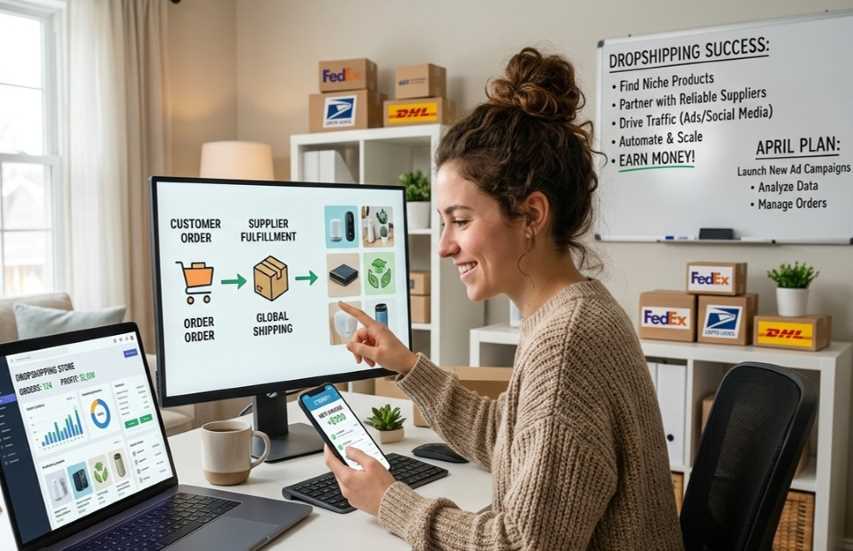
Dropshipping has firmly established itself as one of the most accessible, low-barrier entry points into electronic commerce entrepreneurship in 2026. At its core, dropshipping is a retail fulfillment method where you, as the store owner, sell products online without ever stocking, storing, or shipping inventory yourself. When a customer places an order on your website, you forward the purchase details to a third-party supplier (often based in China, the United States, or Europe), who then packages and ships the item directly to the buyer. You keep the difference between your selling price and the supplier’s cost as profit—minus advertising expenses, platform fees, and minor operational costs.
This model exploded in popularity during the 2010s and continues to thrive today because it removes nearly all the traditional headaches of running a physical retail business: no need for warehouses, no bulk inventory purchases, no dealing with returns logistics on your end, and minimal upfront capital required. In fact, many successful dropshippers launch their first store with less than $300 total investment, covering a Shopify subscription, a domain name, and an initial Facebook or TikTok advertising budget.
Why Dropshipping Remains a Lucrative Opportunity in 2026
The electronic commerce landscape has evolved, but dropshipping’s core advantages are stronger than ever:
Extremely low startup costs: Compared to traditional retail (which can require tens of thousands for inventory), you can go live in a weekend.
Zero inventory risk: You only pay for products after they sell, eliminating the fear of dead stock.
Location independence: Run your entire operation from a laptop anywhere in the world—many six-figure store owners work from beaches or while traveling.
Scalability on demand: Add hundreds of products or expand into new markets without hiring staff or leasing space.
Global supplier network: With platforms like CJDropshipping, Zendrop, and Spocket, shipping times have improved dramatically (7–12 days from United States or European Union warehouses is now common).
Realistic earnings vary widely. Beginners often see their first $1,000–$3,000 in monthly profit within 3–6 months of consistent effort. Experienced operators with optimized stores routinely clear $10,000–$50,000 plus per month, and a small percentage scale to seven-figure businesses by running multiple stores or private-labeling products. Profit margins typically land between 20–40% after all costs, with top performers hitting 50% plus through smart pricing and repeat customers.
However, dropshipping is not passive income or a “get-rich-quick” scheme. Success demands strategic product selection, relentless marketing testing, outstanding customer service, and the ability to adapt to platform algorithm changes. Competition is intense—millions of stores exist—but niches with passionate audiences and solvable problems still offer massive untapped potential. Trends in 2026 include Artificial Intelligence-powered product research tools, faster domestic shipping options, and a surge in eco-friendly and health-focused products.
With that foundation laid, let’s dive into a comprehensive, step-by-step blueprint that walks you through launching your store and scaling it into a consistent revenue-generating machine.
Step-by-Step Guide: How to Launch, Operate, and Earn with Dropshipping
Step 1: Choose a Profitable, Passion-Aligned Niche
Everything starts with the right niche. A focused niche beats a general store every time because it allows you to speak directly to a specific audience’s pain points and desires.
Key criteria for selecting a winning niche:
Strong, verifiable demand (check Google Trends, TikTok search volume, and Exploding Topics for rising interest).
Your personal interest or expertise (makes content creation and long-term motivation easier).
Solid profit margins (target products retailing for $20–$150 with at least 30–50% markup after supplier cost and ads).
Moderate competition (avoid ultra-saturated markets like generic phone accessories unless you have a unique twist).
Evergreen appeal or timely trends (examples: sustainable home organization tools, adaptive fitness gear for seniors, premium pet tech, or seasonal outdoor adventure gadgets).
Practical actions to take right now:
Brainstorm 8–12 niche ideas based on your hobbies, problems you’ve solved, or communities you belong to.
Validate each using free tools: Google Trends, TikTok Creative Center, and Reddit search.
Cross-reference with supplier “best-sellers” lists on AliExpress, CJDropshipping, or Spocket.
Narrow to 2–3 finalists and pick one that excites you most.
Pro tip: Go hyper-specific—for example, “ergonomic standing desks for remote workers with back pain” instead of “office furniture.” This reduces competition and improves ad targeting.
Step 2: Conduct Thorough Market Research and Demand Validation
Never skip validation. This step saves months of wasted effort.
Spy on successful competitors: Use tools like SimilarWeb or simply browse top Shopify stores in your niche. Analyze their pricing strategies, customer reviews, and ad creatives.
Leverage product research platforms: Many offer free trials in 2026, such as Sell the Trend, Ecomhunt, AutoDS, or the newer Artificial Intelligence-driven tools like Dropified Insights.
Calculate rough revenue potential: Look for products with 50–200 daily searches and relatively low advertising competition.
Survey potential customers: Post in relevant Facebook groups or Reddit communities asking about pain points and willingness to pay.
Step 3: Build Your Professional Online Store
Your website is your 24/7 salesperson—invest time here.
Best platform recommendation: Shopify remains the gold standard for beginners thanks to its intuitive interface, one-click application integrations, and built-in analytics. Starter plans begin around $29 per month.
Strong alternatives: WooCommerce (free but steeper learning curve) or BigCommerce for larger-scale operations.
Detailed setup checklist:
Create your account and select a modern, conversion-optimized theme (many premium themes cost $0–$300 but free ones suffice initially).
Purchase and connect a memorable domain (for example, via Shopify or Namecheap for $10–$15 per year).
Install a dedicated dropshipping application: DSers (great for AliExpress), Zendrop (fast United States shipping), Spocket (European Union and United States focus), or CJDropshipping (private labeling options).
Add all legal and trust-building pages: About Us (tell your story), Shipping and Returns Policy, Privacy Policy, Contact page, and Frequently Asked Questions.
Customize branding: Logo (use Canva or Looka), color scheme, and high-quality hero images.
Step 4: Source Reliable Suppliers and Curate Winning Products
Suppliers determine your reputation—choose poorly and you’ll face chargebacks and bad reviews.
Leading supplier platforms in 2026: AliExpress plus DSers, Spocket, Zendrop (7–12 day shipping from domestic warehouses), and CJDropshipping.
Premium directories: SaleHoo, Worldwide Brands, or direct factory outreach via Google.
Product selection masterclass:
Import 30–75 products initially (quality over quantity).
Prioritize items with stunning visuals and short demonstration videos.
Write benefit-driven descriptions using Search Engine Optimization keywords.
Pricing formula: Supplier cost * 2.5–3.5 to cover 30–40% advertising spend, Shopify fees (approximately 2%), and healthy profit.
Test for quality: Order samples yourself to verify durability and packaging.
Step 5: Optimize Your Store for Maximum Conversions
Turn casual browsers into paying customers.
Install trust elements: Real customer reviews via Judge.me or Loox, secure checkout badges, and 30-day money-back guarantees.
Mobile-first design (over 65% of traffic is mobile).
Speed optimization and one-click checkout.
Abandoned cart recovery sequences via email and Short Message Service (applications like Klaviyo or Replo).
Upsell and cross-sell features (for example, “customers also bought” bundles).
Step 6: Master Traffic Generation and Marketing
Marketing is 70% of your success. Focus here early.
Paid advertising strategies: Start small with $5–$15 per day on TikTok Ads or Meta. Create scroll-stopping creatives like user-generated content. Aim for a 3:1 plus Return on Ad Spend before scaling.
Organic and hybrid channels: Build a content engine with daily TikTok, Reels, or Instagram posts.
Micro-influencer collaborations: 10,000–100,000 followers are cost-effective at $50–$300 per post.
Email and Short Message Service marketing: Grow your list with exit-intent pop-ups and automated flows.
Search Engine Optimization and blogging: Publish 10–15 helpful articles to rank on Google long-term.
Step 7: Streamline Order Fulfillment and Operations
Once orders roll in, efficiency is key.
Customer buys : Application automatically forwards order to supplier with correct shipping address.
Supplier ships within 1–3 days and provides tracking.
You notify the customer immediately with tracking information.
Automate 95% of this process so you spend time on growth, not administration.
Step 8: Excel at Customer Service and Retention
Happy customers equal repeat buyers and free word-of-mouth.
Respond to messages within 12–24 hours (use Tidio or Gorgias live chat).
Proactively send shipping updates and post-delivery satisfaction surveys.
Handle refunds and returns gracefully—even if it costs you short-term—to protect your store’s rating.
Build a loyalty program for repeat purchases.
Step 9: Manage Finances, Legal Requirements, and Taxes
Treat this like a real business from day one.
Track every dollar with QuickBooks, Xero, or Shopify’s native reports.
Set aside 25–35% of profits for taxes (consult a local accountant).
United States-based tips: Register a Limited Liability Company for liability protection and collect sales tax via Shopify’s automated system.
Avoid trademarked brands and ensure suppliers offer compliant products.
Step 10: Analyze Data, Optimize, and Scale for Long-Term Profits
Success is iterative.
Weekly metrics to monitor: Conversion rate (target 2.5–5%), average order value, customer acquisition cost, and refund rates (keep under 2%).
Scaling playbook: Kill underperformers immediately. Double down on winners by increasing advertising spend 20–50% weekly.
Outsource: Hire a virtual assistant from Upwork once you hit consistent $5,000 plus per month.
The 2026 "Intelligence" Edge
To truly dominate the market this year, you should leverage the latest technological shifts that go beyond basic store setup. Here is how to gain a competitive advantage:
Artificial Intelligence Visual Production: Do not rely solely on supplier photos. Use generative Artificial Intelligence tools to create unique, high-quality lifestyle imagery and video advertisements. This ensures your brand looks distinct from competitors selling the same item.
Hyper-Personalization: Use Artificial Intelligence-driven recommendation engines that adjust your storefront in real-time based on the visitor's browsing behavior, significantly increasing the average order value.
Voice Commerce Optimization: As voice assistants become more integrated into shopping, ensure your product titles and metadata are optimized for natural language queries (for example, "Where can I buy the best ergonomic desk for back pain?").
Dropshipping in 2026 offers an unprecedented opportunity to build a profitable online business with minimal capital and maximum flexibility. By following this detailed roadmap, you position yourself to generate meaningful income while creating real value for customers worldwide.
The first 60–90 days are about testing, learning, and refining. Stay consistent, document what works, and treat customer satisfaction as your competitive edge. Your first sale could arrive within days of launching your first advertisement campaign. Take action today: Pick your niche, sign up for Shopify, and run a small test campaign. Success is waiting for those who execute.
 |  |  |
 |  |  |