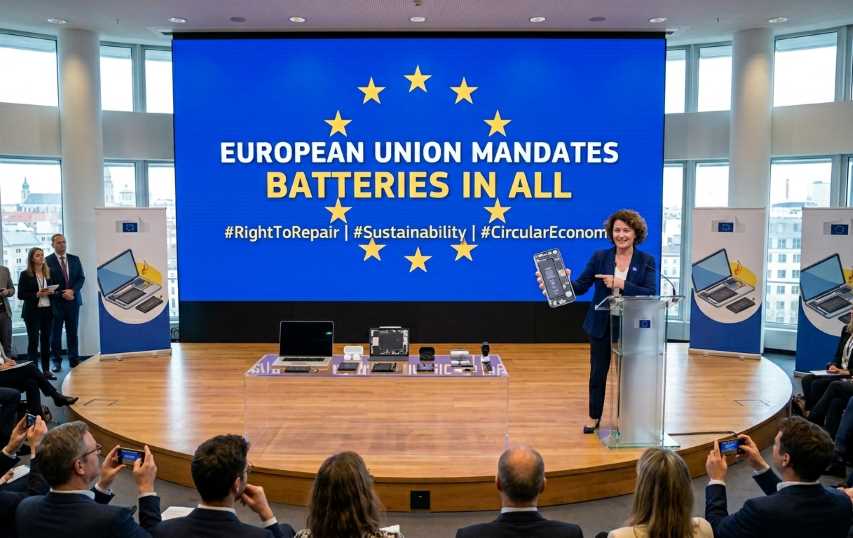
Major Sustainability Push: New Rules Require User-Friendly Battery Replacement Starting February 2027
In a landmark move to combat electronic waste and promote longer-lasting consumer products, the European Union is set to require that all devices sold within the bloc feature batteries that are easily replaceable by the average user. This transformative regulation, part of the comprehensive European Union Batteries Regulation (Regulation European Union number 2023/1542), will take full effect on February 18, 2027, fundamentally reshaping how smartphones, laptops, tablets, wearables, toys, and other portable electronics are designed and manufactured.
The new rules mark a significant shift in how technology companies approach product design. For years, many devices have featured sealed, non-removable batteries glued or soldered in place, making repairs difficult and often leading consumers to discard entire gadgets when battery life declines. Now, the European Union is putting an end to that practice by insisting on designs that empower everyday people to handle battery swaps themselves. This policy is expected to reduce electronic waste dramatically, lower long-term costs for consumers, and encourage manufacturers to prioritize durability and repairability from the drawing board onward.
The rule targets portable batteries—defined as sealed units weighing five kilograms or less that are not designed for industrial, electric vehicle, or specific light-means-of-transport applications. Manufacturers placing products on the European Union market must ensure these batteries are "readily removable and replaceable" by everyday consumers at any point during the device's lifetime, using only basic, commercially available tools such as screwdrivers or pry tools—no specialized equipment, solvents, or thermal methods required.
This requirement is not just a minor tweak; it represents a core principle of the European Union’s broader commitment to sustainability and consumer rights. By forcing companies to rethink internal layouts, the regulation aims to make repair processes as simple as changing a light bulb or replacing a watch battery at home. Experts believe this could extend the usable life of many electronic devices by several years, directly addressing the growing mountain of discarded gadgets piling up in landfills across Europe.
What "Easily Replaceable" Actually Means
Under the regulation, a battery qualifies as readily replaceable if it can be removed and swapped without damaging the device or the battery itself. The process must be performable by a "layman"—the average user with no technical background—in a typical home environment. Fasteners must be reusable or easily resupplied, and manufacturers are required to include clear, step-by-step instructions along with essential safety information right in the product packaging.
No advanced skills, professional service centers, or complicated procedures are permitted. Imagine simply popping open a back cover with a small screwdriver, gently lifting out the old battery, sliding in a new one, and securing everything back in place within minutes. The design must ensure that the battery is accessible without risking harm to the device’s other components, such as the screen, motherboard, or seals that maintain water resistance.
Products must also come with detailed guidance to make the entire process safe and straightforward for non-experts. This includes warnings about proper disposal of old batteries and recommendations for compatible replacements. The goal is to eliminate barriers that previously forced users to pay high fees at authorized repair shops or simply buy new devices. By embedding these standards into law, the European Union is effectively creating a new baseline for what “repairable” means in the modern tech world, fostering a culture where fixing things becomes the norm rather than the exception.
Scope: Which Devices Are Affected?
While the user-friendly requirement applies broadly to devices with portable batteries, it covers a vast range of everyday electronics that millions of people rely on daily. This includes smartphones and tablets, laptops and portable computers, smartwatches and other wearable fitness trackers, wireless headphones and earbuds, children’s toys, handheld gaming consoles, and even certain electric bikes and light mobility devices in specific categories.
The regulation casts a wide net to ensure consistency across the market. For instance, a typical smartphone user in Berlin or Paris will soon be able to replace a degrading battery without voiding the warranty or needing to visit a service center. The same will apply to wireless earbuds, where tiny batteries often fail after eighteen to twenty-four months of regular use. Even everyday items like portable speakers, power banks, and smart home gadgets fall under the new standards.
Exemptions exist for specific scenarios where full user replaceability could compromise safety, waterproofing, or core functionality—such as certain medical devices or specialized industrial tools. However, manufacturers must provide detailed justifications for any derogations, and the European Commission has published clear guidelines to ensure these exceptions are applied fairly and consistently across all member states. For popular devices like smartphones, the rules work alongside separate Ecodesign requirements, but the core mandate for consumer-accessible batteries remains the top priority, leaving little room for loopholes.
Why Now? The Environmental and Economic Drivers
The European Union has witnessed an explosion in battery-powered devices over the past decade, resulting in massive electronic waste—more than fifty million tons generated annually across the bloc. Discarded batteries contribute heavily to environmental pollution, as valuable rare earth materials and toxic chemicals leach into soil and water when not properly recycled. By making batteries user-replaceable, the regulation directly tackles this crisis, encouraging repairs over full device replacements and boosting proper recycling rates.
Economically, the benefits are equally compelling. Consumers could save hundreds of euros over the life of a single device by simply swapping a worn-out battery instead of purchasing a brand-new phone, laptop, or tablet. This shift is expected to ease the financial burden on households while stimulating local repair economies and independent service providers. In an era of rising living costs, empowering people to maintain their gadgets longer represents a practical and empowering solution.
The timing of the regulation also aligns with the European Union’s ambitious Green Deal objectives and circular economy action plan. Lawmakers recognized that traditional “take-make-dispose” models are unsustainable in a world facing resource shortages and climate challenges. Easier battery access means more devices stay in use longer, reducing demand for new raw materials and cutting carbon emissions associated with manufacturing. Environmental advocates have long pushed for such measures, arguing that small design changes can yield enormous planetary benefits when scaled across an entire continent’s market.
Challenges and Opportunities for Manufacturers
Tech giants and smaller electronics brands alike face a significant design overhaul as they prepare for compliance. Slim, sealed devices with glued-in batteries—the industry standard for years—will need complete rethinking to accommodate tool-free or basic-tool access while still delivering high performance, durability, and sleek aesthetics that consumers demand.
Some forward-thinking companies have already begun adapting. Modular designs pioneered by niche brands have demonstrated that repairable products can be both functional and attractive. Major players are now investing in new materials, snap-fit assemblies, and innovative sealing techniques to maintain water and dust resistance without sacrificing accessibility. Analysts predict that while initial production costs may rise slightly, long-term savings from standardized parts and reduced warranty claims could offset these expenses.
The regulation also mandates the availability of spare parts for a reasonable period after a product’s launch, along with digital product information that repairers can easily access. This opens exciting opportunities for innovation: engineers are exploring new battery chemistries, quicker assembly methods, and even software tools that guide users through replacements via augmented reality applications. While challenges around waterproofing and structural integrity remain, many industry insiders view the mandate as a catalyst for creativity rather than a burden, potentially leading to a new generation of more resilient and user-friendly electronics.
Broader Impact on Consumers and the Planet
For European Union residents, this regulation translates into genuine empowerment over their personal technology. No longer will people face the frustration of expensive service center visits or the temptation to trade in a perfectly functional device simply because its battery has lost capacity after a couple of years. The average smartphone lifespan could easily extend by two to three years, delivering substantial savings and reducing unnecessary consumption.
On a planetary scale, the environmental wins are profound. Fewer discarded devices mean less mining for rare metals, lower energy use in factories, and decreased greenhouse gas emissions. Recycling programs will become more efficient as batteries are easier to extract and process at end-of-life. Environmental groups have praised the move as a concrete step toward a truly sustainable tech ecosystem, one where products are designed to be repaired, reused, and recycled rather than quickly replaced.
The regulation also sets a powerful global precedent, much like previous European Union initiatives on charging ports and energy efficiency standards. Manufacturers aiming for the lucrative European market will likely apply these repair-friendly designs worldwide, creating a ripple effect that benefits consumers everywhere. Non-European Union countries may see similar rules emerge as international pressure for greener practices grows.
Looking Ahead: Implementation and Consumer Tips
As the February 2027 deadline approaches, the coming months will be critical for preparation. National authorities across the twenty-seven member states will handle enforcement, with the European Commission providing ongoing support and clarification. Companies are already testing prototypes and updating production lines, while consumer organizations are preparing educational campaigns to help people make the most of their new repair rights.
In the meantime, savvy shoppers can start looking for early signs of compliance—such as modular designs or explicit “user-replaceable battery” labeling—in upcoming product releases. When the rules kick in, simple habits like following the included instructions carefully and sourcing quality replacement batteries from reputable suppliers will ensure smooth, safe swaps.
This isn’t merely a technical update about batteries; it’s a bold declaration that planned obsolescence has no future in a responsible, forward-thinking economy. Devices sold in Europe will soon be built to last, designed with the average user in mind, and engineered for longevity. The European Union’s message is clear: technology should serve people and the planet, not the other way around.
 |  |  |
 |  | ![[Apple MFi Certified]Magnetic Wireless Charger Apple Mag Safe Charger,15W 6FT Fast Wireless Charging Pad for AppleiPhone 1...](https://m.media-amazon.com/images/I/51Om+6sBA0L._AC_UY218_.jpg) |