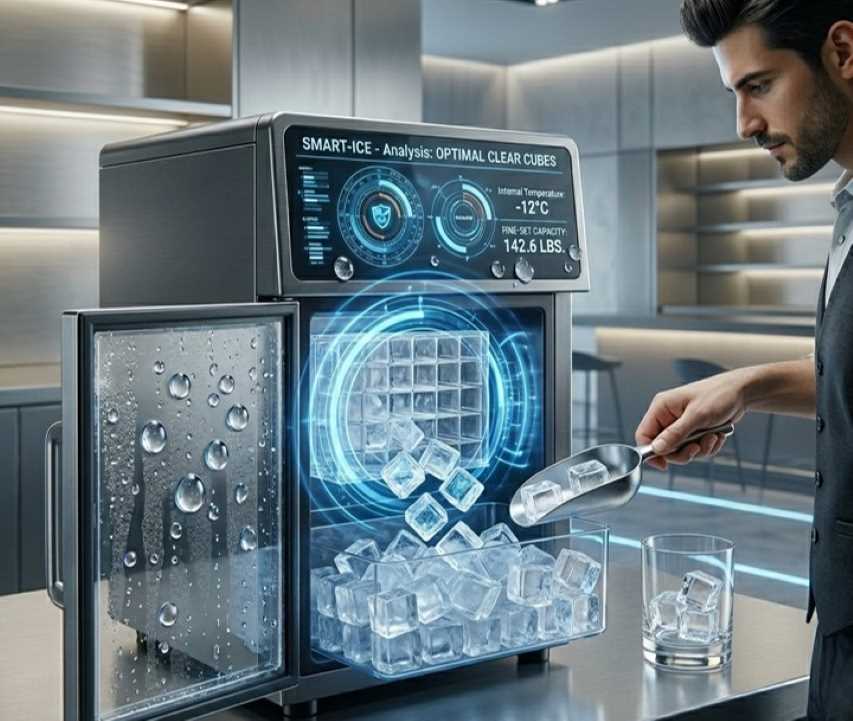
🤔 What is an Ice Making Machine?
An Ice Making Machine is a dedicated appliance that automates the production of ice, eliminating the need for manual ice trays and constant refilling. These machines freeze water in controlled cycles, then release the finished ice into a storage bin for convenient access on demand.
While a standard refrigerator ice maker might produce 5–10 lbs of ice per day, a standalone ice maker can generate anywhere from 20 lbs to over 1,000 lbs daily, depending on its size and purpose. From home countertop units to commercial flakers used in seafood displays, ice makers serve a wide range of applications—keeping drinks cold, preserving food, cooling medical packs, or even providing therapeutic ice baths for athletes.
✨ Why Invest in an Ice Maker? The Core Benefits
❄️ Convenience and Reliability
Never run out of ice again during a party, family gathering, or hot summer day. A dedicated ice machine produces ice continuously, so you always have a fresh supply ready. Many models can produce their first batch in as little as 6–15 minutes.
🧊 Better Quality Ice
Most standalone ice makers produce clearer, harder, and slower‑melting ice than standard freezer trays. This is because they freeze water in thin layers, forcing out impurities and trapped air. The result: drinks that stay cold longer without becoming watery.
🎛️ Choice of Ice Types
Different drinks and applications call for different ice shapes. Ice makers offer a variety of styles:
Cube ice (full or half): Classic, slow‑melting, great for cocktails and sodas.
Nugget / Sonic ice: Soft, chewable, and absorbs flavors quickly—beloved by restaurants and home users alike.
Flake ice: Soft, moldable, ideal for displaying seafood, keeping salads fresh, or medical cold packs.
Gourmet / Clear ice: Crystal‑clear, dense cubes that melt slowly and look stunning in premium beverages.
💰 Cost Savings Over Buying Bagged Ice
If you regularly purchase bagged ice from grocery stores or gas stations, a home ice maker can pay for itself within months. Restaurant‑grade machines offer even greater long‑term savings for bars, cafes, and catering businesses.
🍽️ Versatility for Home and Business
Beyond chilling drinks, ice makers are used for:
Food preservation at buffets and seafood counters.
Smoothies and frozen beverages.
Post‑workout ice baths for athletes.
First aid and medical cooling packs.
Laboratory and scientific cooling applications.
🧊 Types of Ice Making Machines
The market offers a wide range of ice makers, each suited to different settings and ice production needs.
| Type | Ice Output (per day) | Ice Style | Best For | Key Characteristics |
|---|---|---|---|---|
| Countertop Ice Maker | 20–35 lbs | Bullet, cube, or nugget | Homes, RVs, offices, small parties | Portable, no permanent installation; uses built‑in water reservoir. |
| Under‑Counter / Built‑In | 40–100 lbs | Full cube, half cube, nugget | Kitchens, wet bars, man caves | Permanent installation under counter; connects to water line and drain. |
| Portable Ice Maker | 20–30 lbs | Bullet or small cube | Camping, boating, tailgating | Compact, lightweight, often runs on 12V DC (car) or standard AC. |
| Commercial Cube Ice Maker | 100–500+ lbs | Full cube, half cube, dice | Restaurants, bars, hotels | High output, durable stainless steel construction, requires water line and drain. |
| Nugget / Chewable Ice Maker | 40–300+ lbs | Nugget (Sonic‑style) | Home enthusiasts, coffee shops, hospitals | Soft, porous ice that absorbs flavors; often called “the good ice”. |
| Flake Ice Maker | 100–1,000+ lbs | Flake (soft, snow‑like) | Supermarkets, seafood displays, food prep | Produces ice that can be molded; excellent for cooling products without damaging them. |
| Clear Ice Machine | 50–200 lbs | Gourmet clear cubes | High‑end bars, lounges, luxury homes | Produces crystal‑clear, dense ice that melts very slowly. |
🔑 Key Features to Consider
When shopping for an ice maker, these specifications will determine how well it meets your needs.
🧊 Ice Production Rate and Storage Capacity
Production (lbs per 24 hours): How much ice the machine can make in a full day. For home use, 25–40 lbs is sufficient. Commercial settings may need 200–500 lbs or more.
Storage capacity: How much ice the bin can hold before you need to empty it. A small bin (2–3 lbs) means you’ll need to transfer ice to your freezer frequently. Larger bins (10–25 lbs) are more convenient for parties.
⏱️ Cycle Time (First Batch)
Cycle time refers to how quickly the machine produces its first batch of ice. Countertop models typically take 6–15 minutes per cycle, yielding 8–12 cubes each time. Commercial machines may produce a batch every 10–20 minutes but with much larger volume.
🎛️ Ice Size Selection
Some ice makers offer adjustable ice size or multiple cube size settings. This is useful if you want smaller ice for quick chilling or larger cubes for slow‑melting drinks. Premium models allow you to choose between small, medium, and large cubes.
💧 Water Source
Built‑in water reservoir: Portable countertop models have a removable tank (1–5 quarts) that you fill manually. No plumbing required, but you must refill it.
Direct water line connection: Under‑counter and commercial models connect directly to your home or building’s water supply. Requires installation but offers continuous, hands‑off operation.
🔊 Noise Level
Ice makers produce sound from the compressor, water pump, and ice release mechanism. Countertop units typically operate at 35–45 dB (similar to a quiet refrigerator). Commercial machines can be louder (50–65 dB). If placing in a living area or office, check the decibel rating.
🧼 Self‑Cleaning Function
Mineral buildup from hard water can affect performance and ice taste. Many modern ice makers include a self‑cleaning cycle that circulates a cleaning solution or vinegar through the system, then rinses automatically. This feature saves time and extends the machine’s lifespan.
🛡️ Build Materials
Stainless steel exterior: Durable, easy to clean, and resistant to rust. Standard for commercial and premium home models.
Plastic exterior: Lighter and more affordable, but may scratch or discolor over time.
Food‑grade interior components: Ensures ice tastes clean and is safe to consume.
📏 Dimensions and Installation
Measure your available space before buying. Countertop units are typically 10–15 inches wide, 12–18 inches deep, and 12–16 inches tall. Under‑counter models require a dedicated space with clearance for ventilation (usually 2–4 inches on sides and back).
🧭 How to Choose the Right Ice Maker for Your Needs
| Scenario | Recommended Type | Key Priority | Why |
|---|---|---|---|
| Home / Apartment | Countertop or under‑counter (25–40 lbs/day) | Quiet operation, compact size, easy cleaning | Fits on kitchen counter or under bar; produces enough for daily drinks and small parties. |
| Home with nugget ice obsession | Nugget ice maker (40–80 lbs/day) | Soft, chewable ice texture | “Sonic‑style” ice is highly sought after; these machines are more expensive but beloved. |
| Office breakroom | Countertop (30–50 lbs/day) | Low noise, self‑cleaning, visible window | Provides ice for employee drinks and meetings; transparent lid lets you see supply. |
| Restaurant / Bar | Commercial cube or nugget (150–500 lbs/day) | High output, durability, large storage bin | Must handle peak demand; stainless steel construction resists daily wear. |
| Seafood counter / Grocery | Flake ice maker (200–1000+ lbs/day) | Soft, moldable ice | Keeps fish and produce fresh without bruising; melts slowly and drains safely. |
| RV / Camping / Boat | Portable 12V ice maker (20–30 lbs/day) | Low power consumption, rugged design | Runs on DC power from vehicle battery; small footprint for tight spaces. |
| / Cocktail lounge | Clear ice machine (50–150 lbs/day) | Crystal‑clear, dense cubes | Enhances presentation of premium spirits; melts very slowly without diluting drinks. |
🛠️ Installation and Maintenance Tips
Proper installation and regular maintenance ensure your ice maker performs reliably and produces great‑tasting ice for years.
📦 Installation Basics
Countertop models: Place on a level, stable surface near a power outlet. Keep at least 4 inches of clearance around vents. Fill the water reservoir with clean, cold tap water (or filtered water for best taste).
Under‑counter / built‑in: Must be installed by a professional if connecting to water line and drain. Ensure adequate ventilation—most require a 2–4 inch gap at the back and sides. Some models need a gravity drain, while others have a built‑in drain pump for installation away from a floor drain.
🧼 Cleaning and Sanitizing
Mineral scale, mold, and bacteria can accumulate inside the machine, affecting ice taste and safety. Follow this schedule:
Every 1–2 weeks: Wipe down the exterior and ice bin. Remove any lingering ice and dry the bin.
Every 1–3 months (or as needed): Run a cleaning cycle using a manufacturer‑approved ice machine cleaner (citric‑acid based) or a vinegar solution (1 part white vinegar to 10 parts water). Rinse thoroughly.
Every 6 months: Sanitize the machine with a food‑grade sanitizer (follow product instructions).
Signs your ice maker needs cleaning:
Ice tastes or smells odd (musty, metallic, or chemical).
Ice production slows down.
Small ice chunks or irregular shapes appear.
Visible scale (white crusty deposits) inside the water reservoir or ice tray.
💧 Water Quality and Filters
Hard water dramatically increases mineral buildup. Using a water filter (either inline or a pitcher filter for refillable tanks) improves ice clarity and taste while reducing cleaning frequency. Commercial machines often have built‑in or add‑on water filtration systems.
🧊 Storing Ice
Ice left in the machine’s bin for more than 24–48 hours may absorb odors from the freezer compartment or develop a stale taste. For best quality:
Transfer ice to a sealed container or zip‑top bag in your freezer.
Use ice within 1–2 weeks for optimal freshness.
If the machine has been off for a while, discard the first batch of ice after restarting.
⚙️ How Ice Makers Work (Simplified)
Understanding the basic cycle helps you troubleshoot common issues.
Water fill: Water flows into a small ice mold tray (or over an evaporator plate, depending on design).
Freezing: A refrigeration system cools the mold or plate. Water freezes from the inside out, pushing impurities to the center or bottom.
Harvesting: Once frozen, a heating element briefly warms the mold, releasing the ice. A rotating arm or sweeper pushes the ice into the storage bin.
Refill: The cycle repeats automatically until the bin is full. An optical or mechanical bin sensor stops production when the ice reaches a certain level.
💡 Top Ice Maker Examples (Popular Models)
| Model / Brand | Type | Daily Output | Storage | Key Features | Best For |
|---|---|---|---|---|---|
| GE Profile Opal 2.0 | Nugget ice maker | 38 lbs | 3 lbs (removable bin) | Soft, chewable nugget ice; side tank for water; WiFi connected | Home nugget ice lovers |
| Euhomy Countertop | Bullet / cube | 26–30 lbs | 2.2 lbs | Compact, self‑cleaning, visible window, 6‑min cycle | Small kitchens, RVs, offices |
| hOmeLabs Portable | Bullet ice | 26 lbs | 1.5 lbs | Affordable, lightweight, quick cycle (7‑8 min) | Budget‑conscious home users |
| Scotsman CME256 | Commercial cube | 350 lbs | 180 lbs | Stainless steel, air or water cooled, industry standard | Restaurants, bars, hotels |
| Kismile Nugget | Nugget ice | 40 lbs | 3 lbs | Chewable nugget style, self‑cleaning, low noise | Home and small office |
| Follett 7 Series | Chewblet (nugget) | 800–1,300 lbs | 100–500 lbs | High volume, countertop or floor model, hospitals & hotels | High‑demand commercial settings |
| Vevor Clear Ice | Clear cube | 100 lbs | 25 lbs | Crystal‑clear gourmet cubes, digital controls | Upscale home bars, whiskey lounges |
⚠️ Common Issues and Troubleshooting
Problem | Possible Cause | Solution |
|---|---|---|
| Ice tastes bad | Old ice, dirty machine, or bad water | Discard ice, run cleaning cycle, change water filter, sanitize. |
| Not making ice | Bin full, water empty, or too warm | Empty bin, refill reservoir, move to cooler location (85°F max ambient). |
| Ice is cloudy or small | Low water or mineral buildup | Check water level; descale the machine. |
| Machine leaks water | Loose drain cap or cracked reservoir | Tighten cap; inspect reservoir for cracks (replace if needed). |
| Excessive noise | Pump cavitation or loose parts | Check water level; tighten screws; ensure machine is level. |
🏁 An Ice Making Machine is a practical and satisfying addition to any home, office, or commercial kitchen. By providing a continuous supply of fresh, high‑quality ice, it eliminates the hassle of refilling trays and running to the store for bags of ice. Whether you crave the soft, chewable nugget ice of a GE Opal, the crystal‑clear cubes from a gourmet machine, or the massive output of a commercial flaker, there is an ice maker designed for your exact needs.
When choosing, consider your daily ice consumption, available space, preferred ice type, and budget for maintenance (cleaning and potential filter changes). With proper care—regular cleaning, using filtered water, and adequate ventilation—a quality ice maker will serve you faithfully for many years.
 |  |  |
 |  |  |